JOHN FOOS stops manufacturing in Argentina

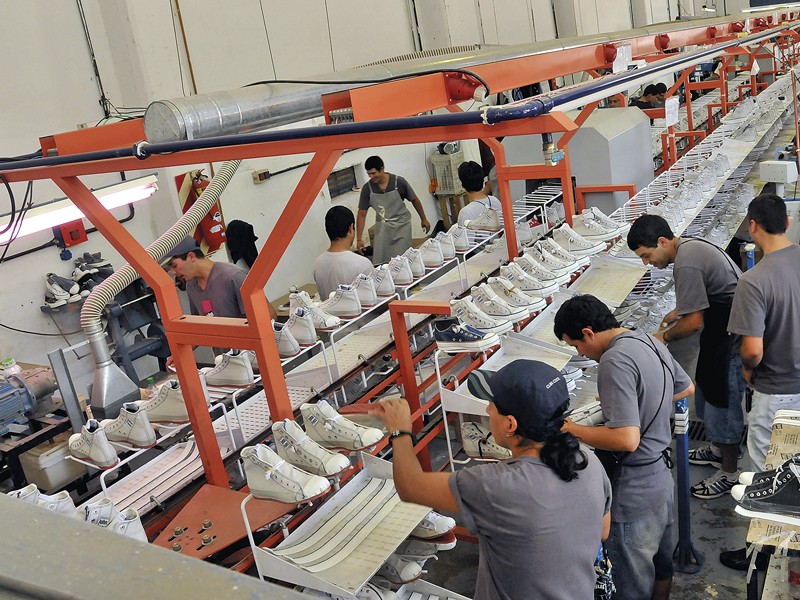
The longstanding footwear company founded in the 1980s announced the closure of its industrial plant in Beccar, Province of Buenos Aires, before the end of April 2026.
Currently, the plant employs 50 workers, while in 2023 it reached 400 employees. In 2021, the factory achieved a production level of 3,000 pairs per day.
The decision reinforces a strong adjustment and production pullback process. Workers were offered severance agreements with compensation of 60 and 70%.
In a statement, the company said it is “going through an internal restructuring process aimed at adapting its operation and ensuring the long-term sustainability of the business,” and stated that the goal is to “consolidate a solid structure that allows the brand to remain active and project itself into the future.” In practice, the company will cease local production and transition into an importer of finished sneakers, keeping only the essential administrative staff in the country.
The company will not import directly from China due to anti-dumping measures currently in force on footwear of Chinese origin. Since 2021, a minimum FOB value of US$ 15.70 per pair has applied to the entry of Chinese footwear, a barrier that remains in place while the regulation is under review. For this reason, the company will shift its sourcing to other Asian production hubs such as Vietnam or Thailand.
The JOHN FOOS case has reopened discussion about the impact of economic opening on domestic industry, in a scenario where more and more companies are choosing to replace local production with imports in order to sustain competitiveness.
RELATED ARTICLES:
- JOHN FOOS expands in the region
- GASPAR, a long-standing sole factory, shut down
- VIAMO on the brink of bankruptcy. Will Argentina’s footwear industry disappear?
- Argentina’s footwear industry: How to survive the crisis