KIOSHI: a testimony on the footwear crisis

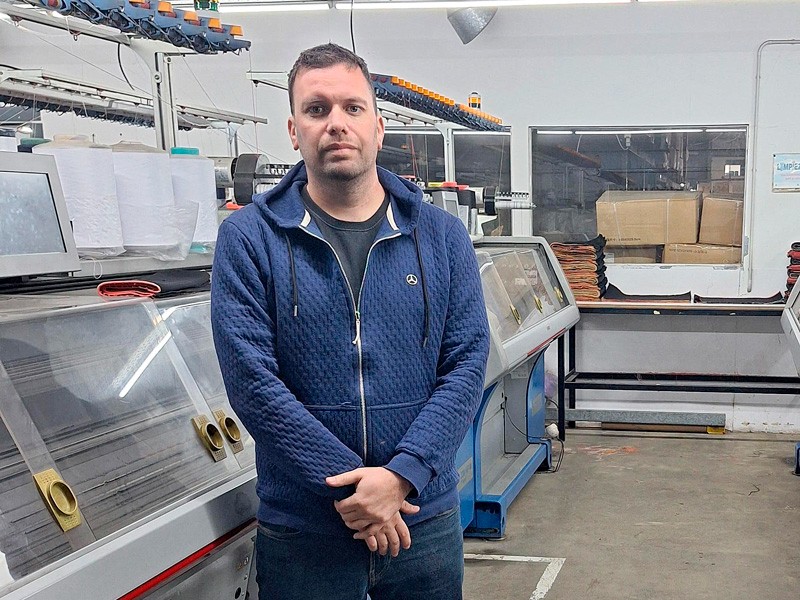
Emmanuel Fernández, owner of the footwear factory and brand KIOSHI, described on the streaming channel Ahora Play some of the situations currently affecting Argentina’s footwear industry, which he described as being “at the limit”.
His factory went from producing 40,000 pairs per month in 2022 and 2023, to 10,000 pairs per month in 2026. Its workforce was reduced from 120 to 15 employees. The decline is not an isolated phenomenon: according to data handled by the sector chamber, national footwear production fell from 120 million pairs per year to 80 million last year. In the first quarter of 2025 alone, it accumulated a 25% drop compared with the same period in 2024.
Among the factors explaining the decline, Fernández identified a combination of mutually reinforcing problems. The first is consumption. Argentina went from selling almost four pairs of footwear per capita per year to two. “We are at the levels of Peru and Bolivia in terms of pairs sold,” he said. The second is imports: in 2024, around 51 million pairs entered the country, 40% more than the previous year. The third is smuggling: “Many counterfeit products are entering through the borders, especially from the north”.
Regarding tariffs, he pointed out that the current scheme favors imported products. Local assembly using parts brought in from abroad has zero tariff, while finished footwear pays 35%, but anti-dumping mechanisms and reference values that previously acted as a restraint were eliminated. “That is making things quite difficult for the industry,” he said. Added to this is an external factor: the trade war between China and the United States, which has generated a surplus of Chinese merchandise arriving at prices far below usual levels.
KIOSHI sells its sneakers for between $35,000 and $50,000 per pair. Fernández presented this as a competitive price for the segment, but acknowledged that the equation has become more complex. “We had a huge increase in energy costs, financial costs and general increases, while tariffs are being lowered for imported goods. So the struggle is uneven”.
In response to the argument that the national industry is inefficient, Fernández said that in his case “we always try to have the best machinery, optimize processes to achieve greater productivity. We are always seeking to improve in order to deliver a better product at competitive prices”.
According to the businessman, current concerns are not only related to his factory, but also to what is being observed across the commercial chain. In recent weeks, he said, reports coming from the interior of the country have been almost daily: footwear stores closing, distributors not renewing leases, four-decade-old businesses liquidating stock, and so on. In addition, factories and workshops continue to close in industrial areas.
The financial situation of the chain has also deteriorated. “Sales are low, collections are worse, rejected checks are coming in from clients who are not fraudulent clients, but clients who cannot cover the check. The banks as well; everyone is maxed out on debt."
A recent episode described in detail by Fernández illustrates the extent of consumers’ liquidity problems. During the weekend following Hot Sale, he noticed a series of purchases that were later canceled. When reviewing the data, he found a common pattern: customers bought in 12 installments and canceled immediately. The platform refunded them the full amount, but they were left owing the amount in 12 payments.
“They make the purchase, but they do not actually buy from you. They buy in 12 installments, cancel immediately, and the platform refunds them the full amount. In other words, people are not making it to the end of the month; they are financing themselves even through these kinds of things. What is happening is quite serious,” he said. KIOSHI had around ten or twelve operations of this type in one weekend. The company’s response was to remove the 12-installment option from its online store.
The KIOSHI factory is located in the district of Esteban Echeverría, in the province of Buenos Aires. The only concrete assistance they received came from the local municipality: producer fairs and a reduction in municipal fees. From the rest of the State, nothing. “As an SME, we are not receiving any assistance”.
Regarding the outlook, he was cautious. He said the company is making “all the necessary changes to try to hold on until things begin to improve”, but admitted that there are no clear signs of when that turning point could arrive. The recent decline in imports, he clarified, is not good news: it is due to overstock throughout the chain and does not mean that the industry is recovering ground. “The main problem is consumption, and we hope it will reactivate,” he concluded.
RELATED ARTICLES:
- ARGENTINA: The footwear sector also urgently calls for the SME Emergency Law
- Chinese investors begin manufacturing footwear in Argentina
- DASS factory in Misiones permanently ends production