How is war affecting footwear?

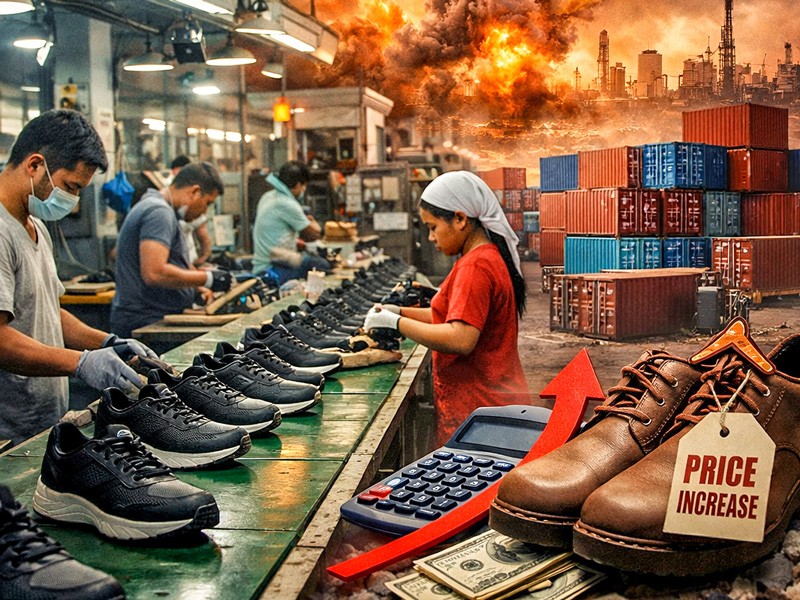
The consequences of current armed conflicts, particularly the tensions in the Middle East (Iran-Israel) and the ongoing instability in Eastern Europe, are reshaping the global footwear industry in 2026.
The influence is transversal and affects everything from basic chemistry to the final retail price of the product.
These are the four main axes of this transformation:
The war has struck at the core of synthetic supplies. Production is being threatened not only by energy availability, but also by the shortage of essential petrochemical raw materials:
• Polymer shortages: Materials such as PU (polyurethane), EVA, PVC and synthetic rubbers have experienced severe supply disruptions. (source: Shoes Accessories)
• Technical stoppages: In production hubs such as India and Southeast Asia, many SMEs have had to reduce shifts or halt assembly lines due to the lack of basic components that depend on stability in the Gulf.
Rising costs are the most immediate effect and the hardest for manufacturers to absorb:
• Raw materials: Increases of up to 50% have been reported in basic chemical supplies for soles and synthetic materials. (source: Shoes Accessories)
• Energy and freight: Instability on maritime routes, such as the Red Sea and the Gulf, has pushed freight rates up by an additional 7% to 10% in the last quarter.
• Pass-through to final prices: In an attempt to preserve operating margins, producers are applying increases of between 10% and 20% to finished footwear, directly affecting competitiveness in international markets.
"Just-in-time" logistics has collapsed, forcing companies to change strategy:
• Longer routes: The diversion of vessels to avoid conflict zones is increasing delivery times by weeks, disrupting seasonal calendars (Spring-Summer/Autumn-Winter).
• Regionalization (Nearshoring): There is a faster move toward sourcing from suppliers closer to consumption centers in order to reduce the risk tied to transoceanic freight, although this often implies higher labor costs.
The global market is showing a dual behavior under the weight of war:
• Inflation-driven contraction: In regions facing high inflation and import liberalization, consumption of domestically made footwear is falling sharply, leading to factory closures and job losses.
• Market polarization: While the luxury segment and high-technology athletic footwear (global brands) continue to post resilient growth of around 6%, the mid-range segment and local brands are suffering stagnation or decline.
• Search for value: In 2026, consumers are prioritizing durability and versatility (hybrid footwear) over fast fashion, as an economic response to global uncertainty.
The ability of companies to survive in this environment now depends more than ever on logistics agility and the adoption of efficient technologies, such as automated cutting, robotics and 3D design, that help reduce material waste, whose prices remain extremely volatile.
Sources consulted: Shoes Accessories and McKinsey-USA/WorldFootwear-Portugal. Image: Shoes Accessories
RELATED ARTICLES:
- Organizations encourage Mercosur-European Union agreement
- U.S.-Iran war: Growing risk for the global footwear industry