Microencapsulated materials: new materials for footwear

Basically, they are materials to which active substances are added in microscopic spheres that protect them and are released in a controlled way.
It is not only about mixing ingredients, but about engineering at a micrometric level.
The microcapsule works like an egg: it has a shell (polymer) and a yolk (the active ingredient).
The Core: This is the material we want to protect (perfumes, oils or thermal waxes). It can be liquid or solid.
The Shell: This is the protective membrane. Its composition depends on how we want the content to be released. Materials such as gelatin, polyurethane or synthetic polymers are used.
• Phase Change Materials (PCMs)
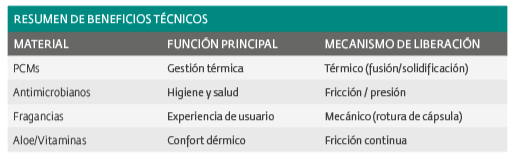
They are possibly the most popular in high-performance and safety footwear. They use waxes or paraffins that absorb or release heat according to the temperature of the foot.
How do they work? When the foot heats up, the microcapsule absorbs the heat and the internal material becomes liquid. When the foot cools down, the material solidifies and releases that stored heat.
Characteristics: Through active thermoregulation, the foot is kept in a constant “comfort zone”.
Sweat reduction: By avoiding heat peaks, perspiration decreases.
• Antimicrobial and Antifungal Agents
Instead of applying a surface spray that disappears with use, these agents are integrated into insoles or linings through microcapsules.
The most commonly used substances are: tea tree oil, silver ions or chitosan, a natural polysaccharide biopolymer.
Characteristics: Prolonged release, through the friction of the foot that gradually breaks the capsules, releasing the agent for months.
Odor control: They attack the root of the problem (bacteria), instead of only masking it.
• Fragrances and Aromatherapy
Widely used in children’s, sports or leisure footwear (fashion sneakers).
Substances: Lavender, mint, lemon essences or even “new shoe” scents.
Characteristics: Burst effect, where the fragrance is mechanically released with the pressure of walking.
Sensory marketing: It improves the unboxing experience and the first months of use.
• Skin Care Agents (Cosmetotextiles)
They are mainly used in women’s footwear and technical hosiery.
Substances: Aloe vera, vitamin E, essential oils or moisturizers.
Characteristics: Hydration helps prevent chafing and keeps the skin soft.
And due to its soothing effect, it is ideal for footwear worn without socks.
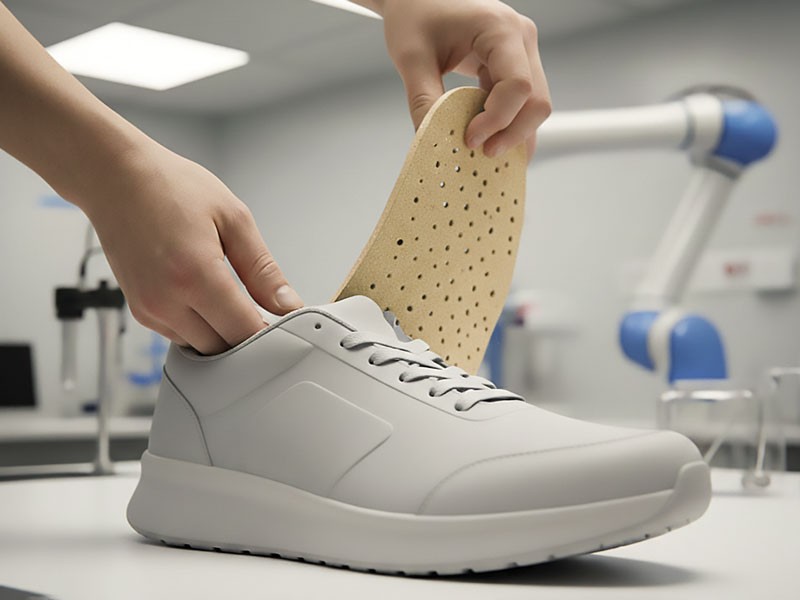
They are generally not applied to the outer leather or synthetic material, but are integrated into: