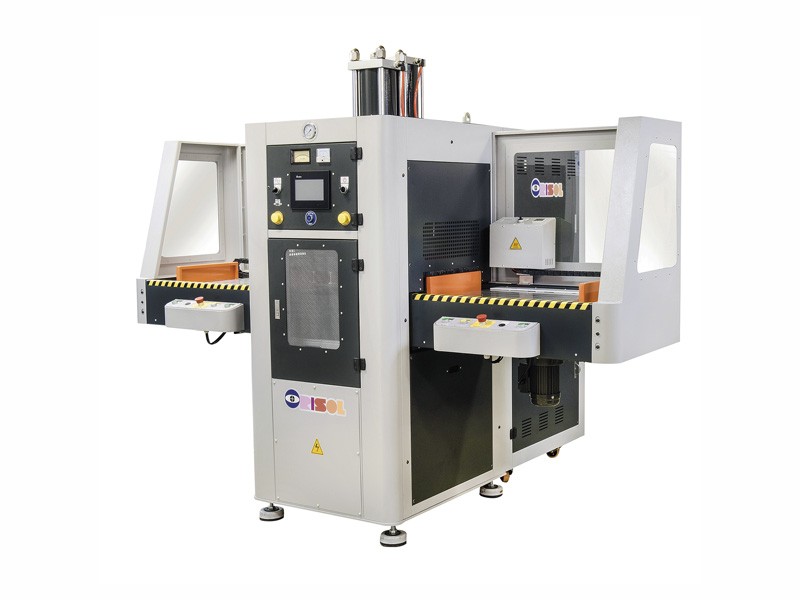
High-frequency in footwear and leather goods

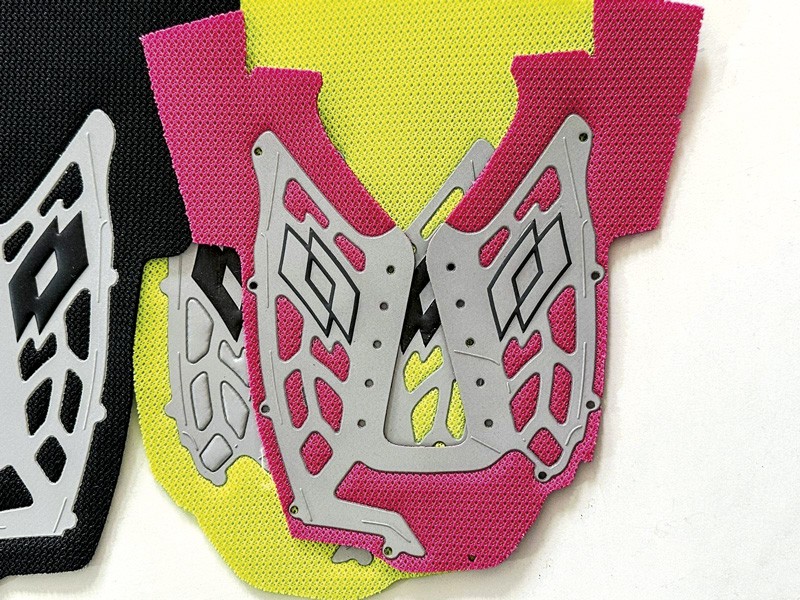
The high-frequency process (also called HF or dielectric welding) is a widely used technique in the footwear and leather goods industry to bond, mold or customize synthetic materials, especially PVC, PU and vinyl laminates. It works through the application of high-frequency electromagnetic fields (27 to 40 MHz) combined with mechanical pressure, using metal dies, generally made of aluminum.
• Embossing of logos and textures on shoe uppers, bags and handbags.
• Seamless bonding of synthetic parts (vamps, tongues, details).
• Molding of reinforcements and trims.
• Manufacturing of sandals, sports shoes and children’s footwear with both aesthetic and functional welding.
High frequency combines heat and pressure generated internally to bond or decorate synthetic materials quickly, cleanly and durably, a feature highly valued in modern footwear industry. It can be applied to various parts and purposes:
External parts of bags, handbags and uppers
Seamless welding of synthetic fabrics (PVC, PU, laminates).
Application of decorative embossing, textures and logos.
Replacement of stitching in areas requiring lightness and flexibility.
Linings and tongues
Bonding of internal layers with a clean finish.
Embossing of brand, size or functional details (vents, reinforcements).
Insoles
Application of labels and markings.
Anti-slip reliefs or cushioning zones through localized compression.
Soles and midsoles
Embossing of logos or anti-slip patterns.
Bonding of protective or decorative films.
Accessories
Welding of labels, emblems and heel pull tabs.
Application of decorative pieces without seams or glue.
In summary, high frequency is used wherever there is a need to bond, print or decorate synthetic materials quickly, precisely and with a high-quality finish, replacing traditional stitching or gluing.
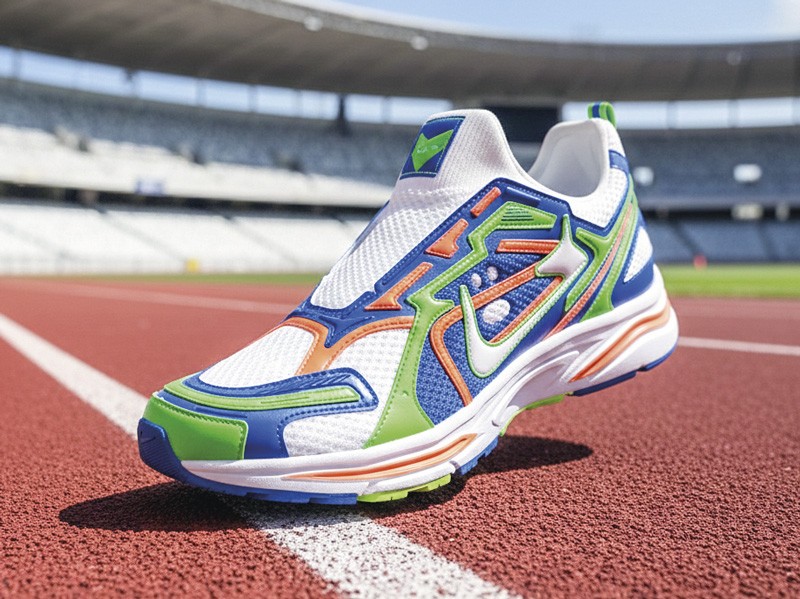
1. Cutting of parts
Synthetic materials (PU, PVC, laminated textiles) are cut into specific shapes (upper, tongue, lining, labels, etc.).
2. Preparation of the piece
Selection of the areas where high frequency will be applied.
Placement of films, additional layers or reinforcements.
3. Application of high frequency
Welding/bonding of parts: replaces stitching, joining upper parts, tongue or lining.
Stamping/embossing: creates logos, textures, decorative lines or functional areas.
Insertion of elements: fixing of labels, heel pull tab, emblems or other details.
4. Upper assembly
The upper, already stamped/welded with high frequency, is assembled on the last.
5. Sole attachment
May include high-frequency embossing on insoles or sole areas (e.g. brand, size, anti-slip pattern).
6. Finishing
Inspection of embossing and welding.
Additional details (colors, painting, laser engraving, gluing accessories).
High frequency is applied after cutting and before final assembly, mainly to bond, decorate and personalize bag components or uppers and insole parts.
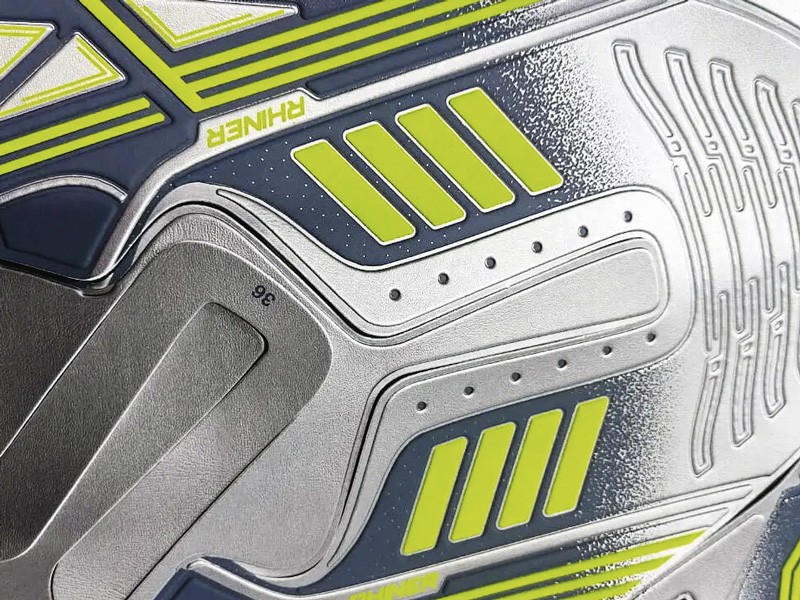
• Material preparation
The parts (uppers, linings or trims) are placed in layers on a metal die (mold).
Normally, the materials must contain polymers with good dielectric response, such as PVC.
• Application of the high-frequency field
The machine generates an alternating electromagnetic field that causes intense vibration in the polar molecules of the material.
This molecular vibration generates internal heat, unlike conventional heating (where heat is applied from the outside in).
• Fusion and forming
The pressure exerted by the mold, combined with the internal heat generated, causes localized fusion of the surfaces in contact.
The material bonds cleanly, without the need for glue or stitching, and can also be stamped or embossed.
• Cooling and finishing
After a few seconds, the power is switched off and the parts cool under pressure, consolidating the weld or embossing.
The result is a firm, clean-edged bond, often stronger than the material itself.