Portugal strengthens its leadership in the international market

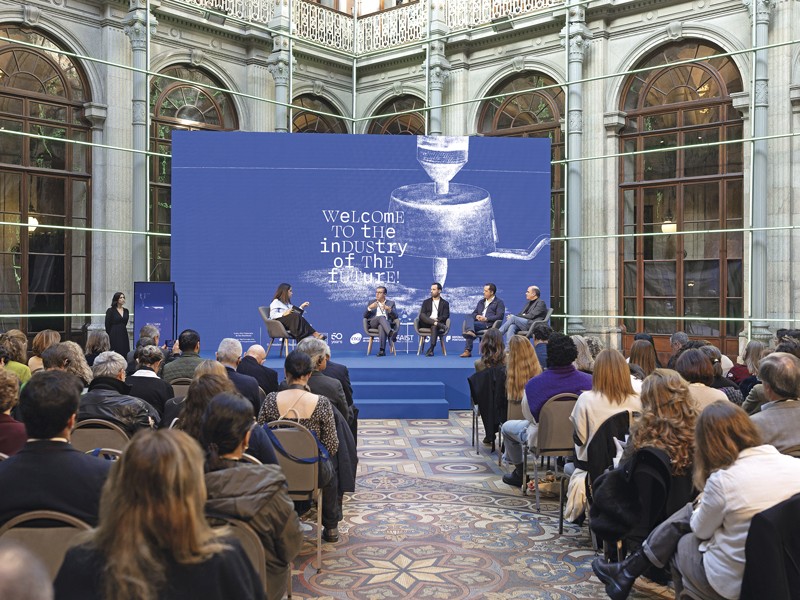
Between November 16, 17 and 18, an important event (conferences and factory visits) directed to the footwear sector took place in the city of Porto, Portugal, organized by APICCAPS, the Portuguese Footwear, Components and Leather Goods Manufacturers Association, together with the Portuguese Footwear Technology Centre -CTCP-.
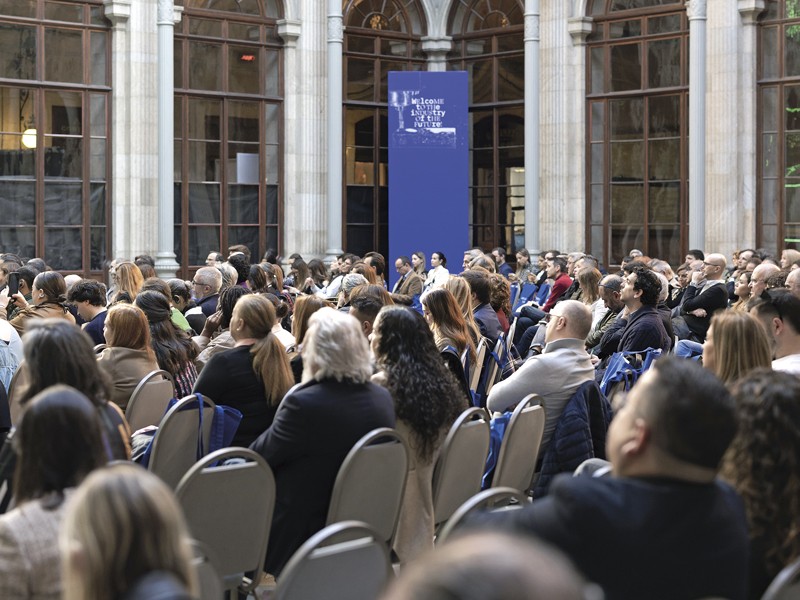
Under the title “Welcome to the Industry of the Future”, business leaders, industrialists, academics, executives, technicians, professionals and press specializing in footwear, from both the local and international fields, attended.
The meeting was described as highly valuable in terms of content on knowledge and current topics applicable to the industry. At the same time, attendees were able to see firsthand the evolution of Portugal’s footwear industry and its preparation to assume leadership based on innovation, technology and sustainability in the international market.
The activities were held at the Palácio da Bolsa in Porto, where a series of panels composed of well-known professionals addressed topics such as: “From Automation to Robotics”; “New Business Models”; “International Perspectives on Innovation, Sustainability and Technology”; “How Artificial Intelligence Is Transforming the Industry”; “Reindustrializing Europe: The Challenge of the Next Decade?”, and numerous other points of interest.
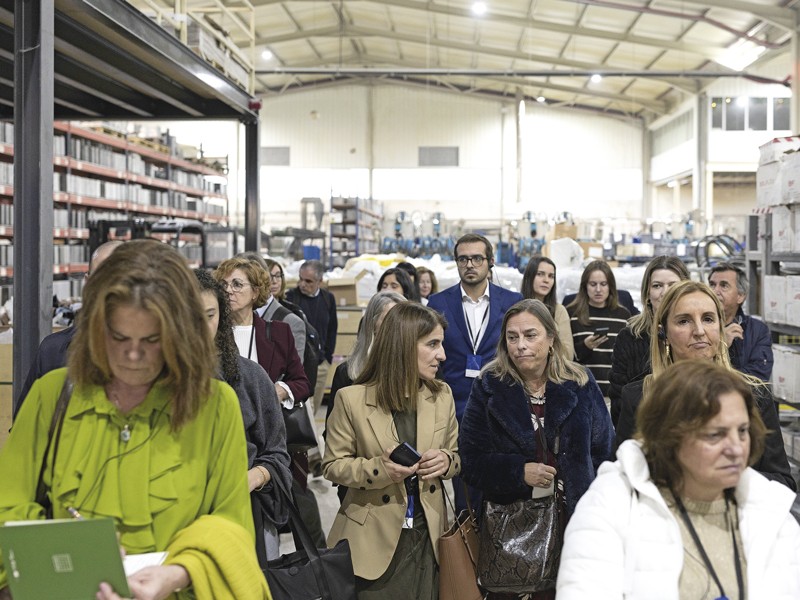
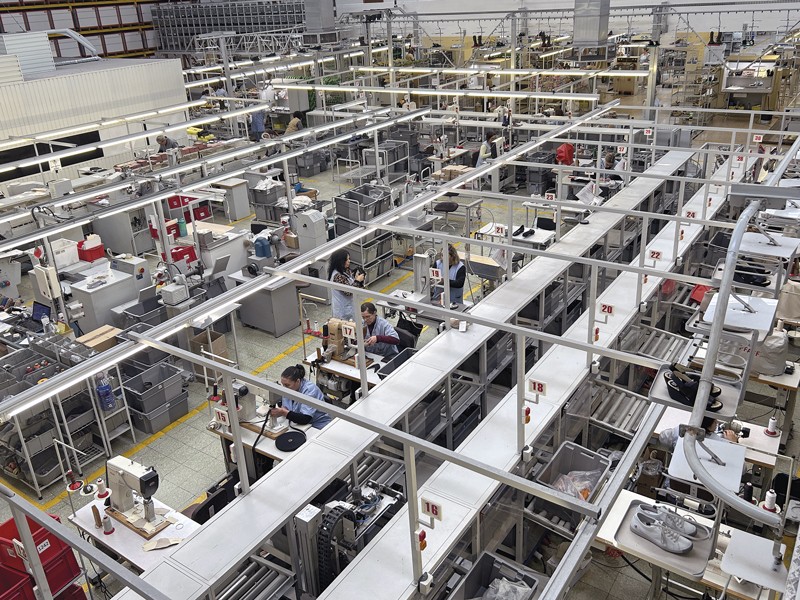
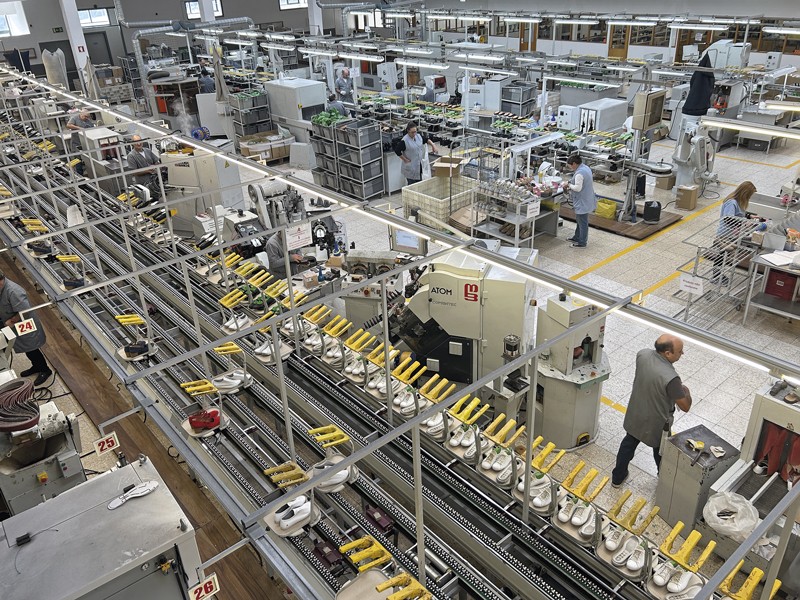
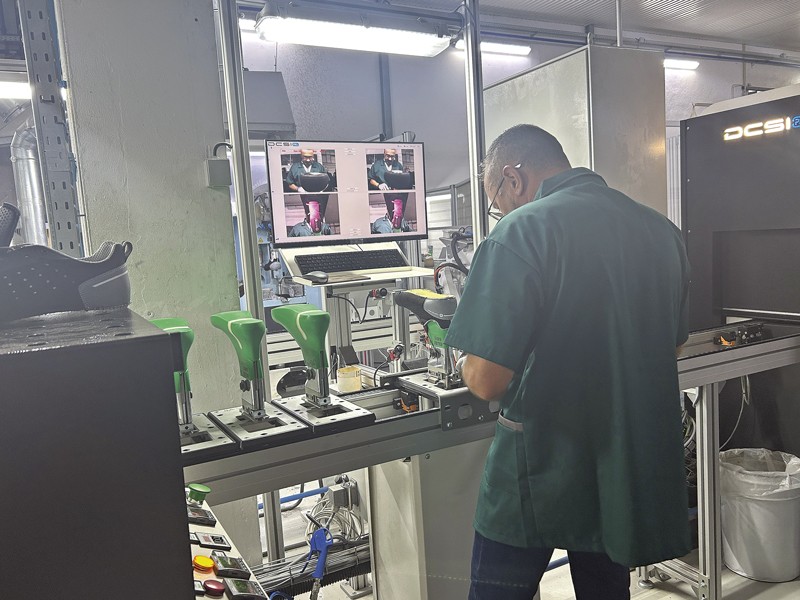
As a complement to the conferences, journalists and invited guests took part in a program of visits to footwear and component factories in the industrial areas of Felgueiras and Guimarães, where they observed the production processes of important facilities such as AMF Safety Shoes, VAPESOL, CARITÉ, BOLFLEX and KYAIA. In these facilities, a high degree of technification was confirmed, especially in AI-assisted design, automation and robotization, and the use of recycled materials, along with sustainability policies.
Portugal’s footwear industry is taking bold steps to become the most modern in the world. Driving this transformation is FAIST – Agile, Intelligent, Sustainable and Technological Factory–, an important mobilizing project framed within Portugal’s Recovery and Resilience Plan (PRR).
With an investment of 50 million euros and the participation of 45 co-promoters, FAIST establishes a new benchmark in innovation, sustainability and industrial efficiency.
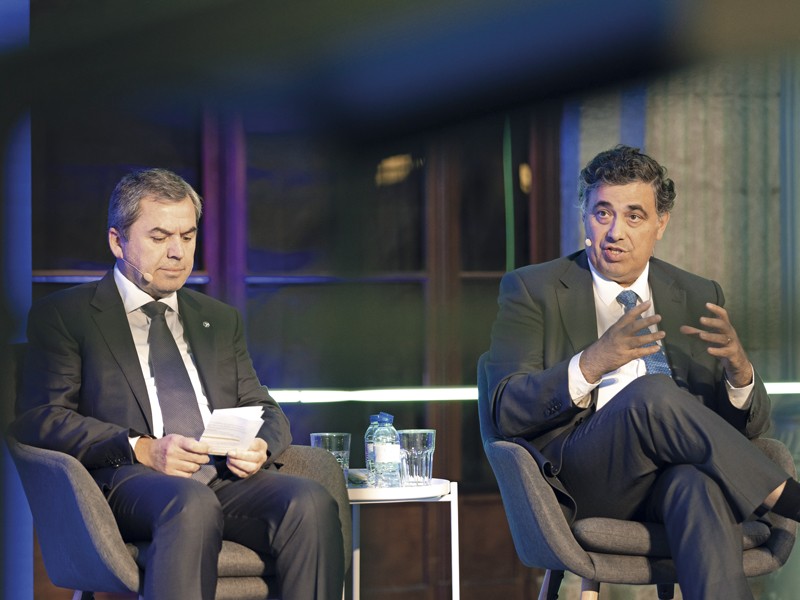
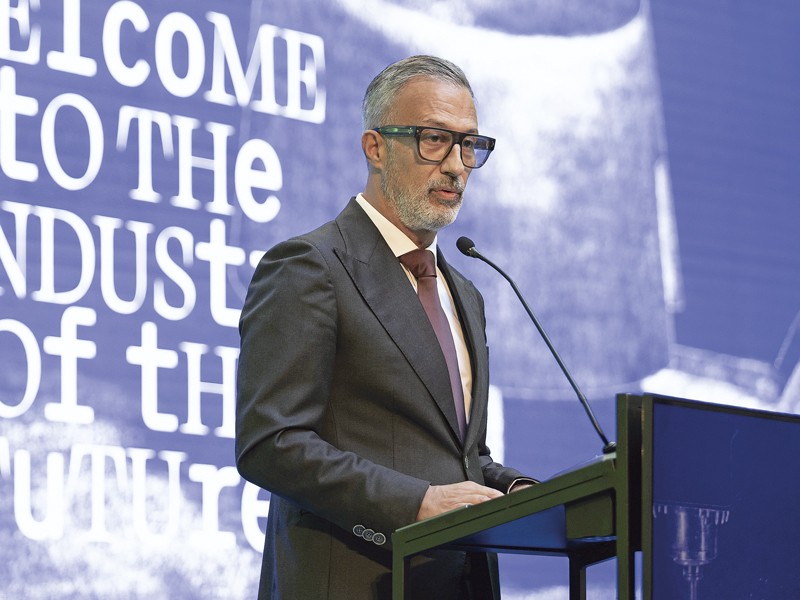
“Our objective is for the Portuguese footwear industry to remain at the forefront and consolidate itself as the most modern in the world,” stated Luís Onofre, president of APICCAPS.
In his opening speech, he asserted that “the concentration of 90% of footwear production in Asia is not sustainable, neither from the environmental, social nor economic point of view,” which makes “the sector unequal, especially by ignoring the potential that Europe has.” Luís Onofre has no doubts: “Europe cannot afford the luxury of playing a secondary role. On the contrary, it must consolidate itself as a benchmark of quality, innovation and responsibility toward the well-being of our planet.”
He highlighted that the growth in recent footwear exports “reflects the enormous adaptability of the Portuguese industry in a moment of great complexity, which has been able to adapt quickly to the new consumption dynamics.” He underlined that “the sector, after the investments underway, is better prepared to compete at the global level.”
With these results, he projected that 2025 may conclude “as a year of stabilization and strategic repositioning,” marking a new cycle of international consolidation for Portugal’s footwear industry.
For Florbela Silva, project coordinator, 75% is already completed. The Agile, Intelligent, Sustainable and Technological Factory -FAIST- aims to transform the Portuguese industry into the most modern in the world, ensuring greater efficiency and profitability in production, along with better working conditions and greater flexibility to respond to market demands.
The objective is “to increase the level of specialization of the Portuguese footwear industry for new types of products and improve the supply capacity of Portuguese footwear companies, strengthening their operational capacity to produce medium and large orders through more efficient assembly processes.”
“The path requires continuous investment, sustained collaboration between industry and the academic world, and a commitment to digital excellence and environmental responsibility.”
In the closing session, Rosana Perán, president of the European Footwear Confederation, highlighted that “Portuguese footwear, through the FAIST project, has taken a giant step by demonstrating that progress does not imply abandoning tradition, but combining craftsmanship with robotics, automation and artificial intelligence to create new value.” She added that “Portuguese companies have shown that innovation, when based on skill, can redefine competitiveness,” since “artificial intelligence must be used responsibly, prioritizing human talent.”
The highest representative of European footwear considered that for the EU to achieve “a framework of competitiveness and growth, it is necessary to guarantee equal conditions at the global level, limit the access of online platforms that sell products that do not comply with European regulations, promote sustainable consumption and promote the added value of footwear manufactured in the EU in the markets (through the European Digital Product Passport and ecodesign).”
For her part, Sofia Moreira de Sousa, representative of the European Commission in Portugal, also praised that “the Portuguese footwear industry is today a clear example of how strategic anticipation and the capacity for adaptation can transform challenges into a competitive advantage,” and that “the compass of competitiveness points toward strengthening strategic value chains, investment in innovation, the acceleration of the green transition, the attraction and qualification of talent and the support of sectors capable of leading by example.”

Companies – Businesses
FOOTWEAR | | | | | | | | | | | 1.171 |
COMPONENTS | | | | | | | | | | | 283 |
LEATHER GOODS | | | | | | | | | | | 123 |
Total | | | | | | | | | | | 1.577 |
| | | | | | | |
Jobs
FOOTWEAR | | | | | | | | | | | 33.057 |
COMPONENTS | | | | | | | | | | | 5.455 |
LEATHER GOODS | | | | | | | | | | | 4.063 |
Total | | | | | | | | | | | 42.575 |
| | | | | | | | | | | |
Exports
FOOTWEAR | | | | | | | | | | | 1.839 |
COMPONENTS | | | | | | | | | | | 73 |
LEATHER GOODS | | | | | | | | | | | 310 |
Total | | | | | | | | | | | €2.222 billion |
| | | | | | | | | | | |
During the last decade, the Portuguese cluster has strategically diversified its export portfolio to mitigate risk and capitalize on new growing markets. The United States is its largest non-European market, representing 5.2% of total footwear cluster exports, and continues to show significant growth potential.
The industry has also ventured into emerging markets in Asia and Latin America.
Since 2023, exports have expanded to Latin American countries such as Argentina, Brazil, Colombia and Mexico, and to Asian countries such as Hong Kong, Macau, Singapore and Taiwan. But even within Europe, diversification is occurring through increased exports to countries such as Bosnia and Herzegovina, the Czech Republic, Estonia, Lithuania, Slovakia and Slovenia, all with growth rates above 20% last year. Still, Europe remains the largest market for the cluster’s products, with just over half of its exports going to Germany (23%), France (19%) and the Netherlands (12%). The European Union as a whole receives just under 80% of the total, driven by strong demand for luxury and high-quality footwear.

Vasco Rodrigues, professor at the Catholic University of Portugal
He presented an exhaustive analysis of the global evolution of the sector, identifying the factors that determined, and will continue to determine, the direction of the industry. The academic highlighted four decisive events: China’s entry into the WTO, which “forever altered global footwear trade”; the change in consumer preferences; the transformation of sales channels with the rise of e-commerce; and the new challenges posed by major digital platforms.
The academic recalled that China doubled its exports in the first five years after joining the WTO, which triggered a global reorganization that led many international producers to move their factories to Asia. In terms of consumption, Asia also maintains its leadership, followed by North America. Europe remains a mature market, with approximately four pairs per person per year, while Africa is emerging as a market to explore.
Regarding the future, the professor highlighted four forces that will define the next decade: demographics, consumer preferences, technological transformation and the global economic reconfiguration.
Finally, in economic terms, Vasco Rodrigues noted that “the direction the United States will take is very unpredictable, and projections point to uneven global economic growth.” In Europe, relatively slow growth is expected compared with other regions. In addition, there is the risk of a crisis affecting China. Therefore, the future of the footwear market presents great uncertainties, changes and challenges, but at the same time, it is also a moment of great opportunities, and each one must take advantage of them so as not to miss the train of evolution.
Representatives of AMF, Rodiro, Tropimática and Carité
They emphasized that robotization in footwear is “much more complex than in the automotive industry” due to the variability of materials and collections. The consensus was clear: technology does not replace people, but qualifies them.
It is necessary to combine creativity with productive efficiency based on technological development. And this is not an option, but a requirement, both to respond to global competition and to the shortage of labor.
“If factories do not become more technologically developed to attract younger and more qualified personnel, it will not be possible to succeed or achieve competitiveness in the footwear industry,” stated Albano Fernandes of AMF. He then added that Europe faces a serious shortage of labor to perform certain tasks and that robotics is the solution to face this challenge.
For his part, Ricardo Costa of Rodiro noted that “with robotization we should not fear the loss of jobs, but with the arrival of humanoids we can begin to ask ourselves that type of question.” Using his company Rodiro as an example, he indicated that “even when investing in robotization, it is necessary to continue investing in people.” With robotization, “we end up having more efficient and productive personnel because they are not as worn out,” however, “it is necessary to invest in personnel prepared for these investments.”
Ventura Correia of Carité emphasized that “the incorporation of automation in companies is necessary to guarantee a constant quality productivity with less human effort.” In fact, “the robot is important so that we can have people available to perform tasks within their exclusive domain.”
He also warned that, “if we exclude some very specific market niches, companies that do not invest in technology will soon be unable to produce in Europe because they will not have the labor necessary to perform the most basic operations.” Hence the intense introduction of robots in the footwear industry: “A young person graduating with higher qualifications and training is not available to go into a factory eight hours a day applying adhesive to an upper. That is the reality.”
Vítor Almeida of Tropimática detailed that, more important than the cost of the equipment itself, is the cost of a successful transition, since a company that is currently not automated and intends to invest in industrial robotics and automation internally must take a big step. “Let us not sugarcoat it,” it is a complex process that depends largely on how it is implemented.
All agreed that the issue is not to replace people with robots, but to use automation to drive the sector, gain scale and optimize processes. And if there was any doubt, now everything is clear: the survival of footwear manufacturers depends on technology.
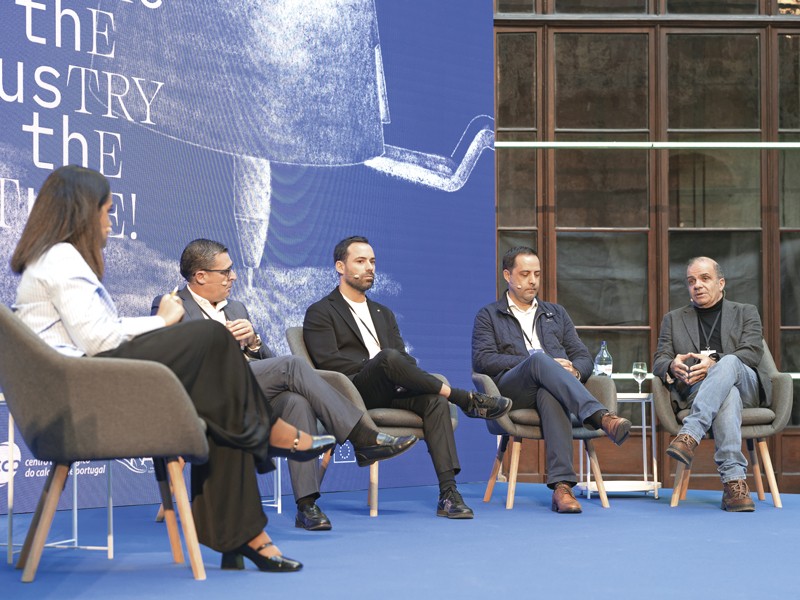
Participants: Fernando Ferro of DCSI Pro, Flávio Ferreira of Bolflex/Rubberlink, João Esteves of Diverge and Rui Moreira of CTCP.
The objective was to understand how business models must be shaped and adapted to the current reality. A business model is how a company creates and develops its value proposition, how it presents itself in the market and how it reaches customers. Regardless of whether this business model is sustainable in a B2B, B2C or even hybrid model, it is important that companies reflect on how they want to differentiate themselves in the market.
For Rui Moreira, head of the business organization and management department at CTCP, the development of the business model of the footwear sector depends on differentiating factors beyond price, although price remains relevant: “Ultimately, it is about understanding our DNA, what differentiates us from others, who our target audience is, how we reach them and what we need to develop internally so that they recognize that differentiating factor in us.”
According to Flávio Ferreira of Bolflex/Rubberlink, “the demand for customized products has increased, and this fact is closely related to brands increasingly seeking to differentiate themselves; therefore, we have moved from a more aesthetic customization to something much deeper.” With a vertically integrated structure and a strong component of circularity and automation, they have been able to meet product customization requests easily, since they do not depend on third parties. Flávio advised that “all entrepreneurs who have not yet begun digitalization should do so now, because indeed there are significant improvements in data collection.”
João Esteves also highlighted the importance of technology at various stages of the process, such as the initial contact with the customer and the organization of order forms, to optimize work processes. In this way, they can “use technology to try to create these somewhat disruptive business models.” He believes that AI is a catalyst and facilitator of processes for a company that does not have all the resources it would like.
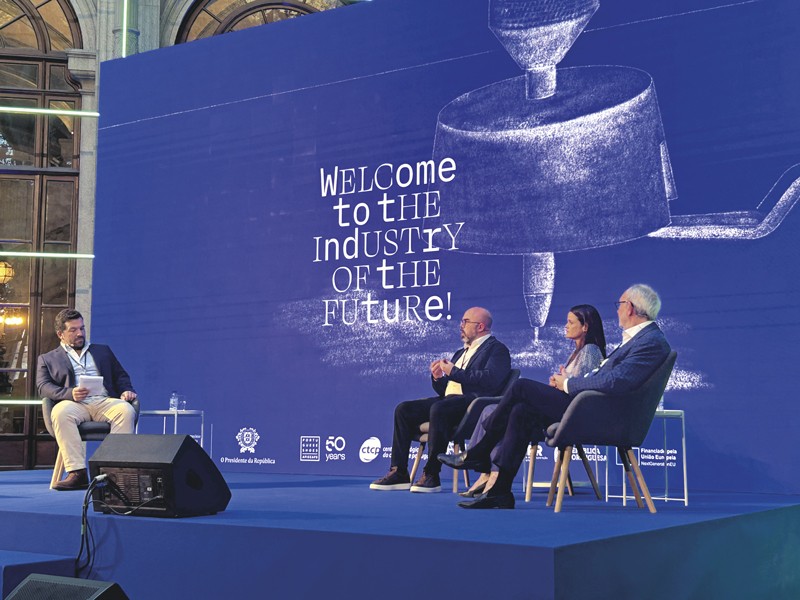
Participants: Carrie Howles of What the Future, Cristiano Figueiredo of CTCP and Sergio Dulio, president of UITIC, International Union of Shoe Industry Technicians.
What defines the industry of the future? What challenges await us? What are the next steps and what are the main forces driving this transformation in the sector? These were some of the questions the panelists sought to clarify.
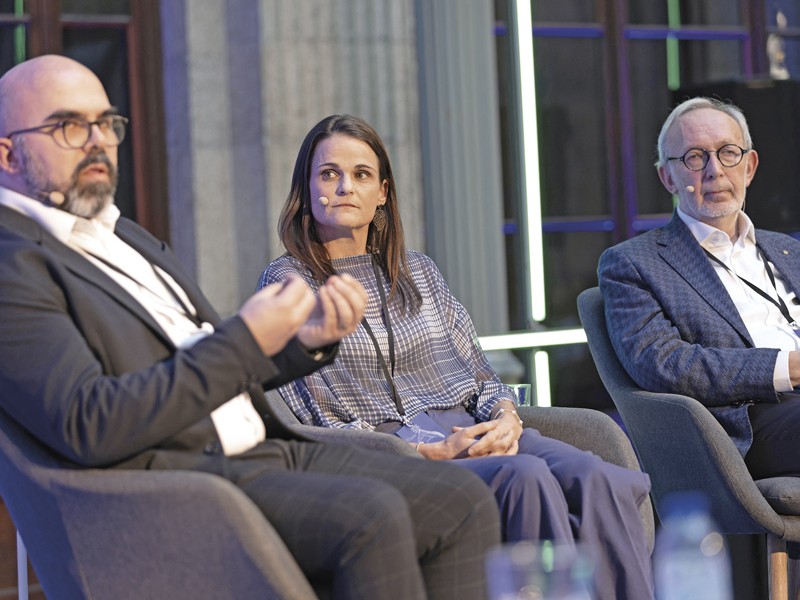
In the opinion of Sergio Dulio, regarding the structure of footwear manufacturing and the posture of companies, he said “we live in a very polarized world, as there is massive production organized in one part of the world and the opposite is observed in the other.” He also pointed out that there are indications of a change in production location, but not on a large scale as occurred some years ago. In this sense, in the future, he does not see “much room for large expansions in terms of volume, but rather for the consolidation and diversification of business through innovation and the adoption of new technologies.”
According to Cristiano Figueiredo, one of the main difficulties that Portuguese footwear manufacturers face in adapting and adopting these new technologies and innovations “is cost, since some of these solutions are expensive.” Hence the importance of projects such as FAIST, “as it brings companies together to achieve results, reducing technology costs.” Another difficulty lies in the organization itself, since “companies need to carry out a self-analysis and understand what they want to automate and what processes they want to digitalize.” Finally, there is also the problem of capacity, since it is necessary to train people in this new technology, “because it is not only about buying equipment and setting up a production line.”
Carrie Howles believes that incorporating technology into footwear production is extremely beneficial. To support this argument, Carrie used the example of 3D printing of shoes, which is generating great enthusiasm among younger generations “because they do not feel the need to carry out certain tasks.” Therefore, “technology is created to manufacture shoes differently, which leads us to critically analyze our process, looking for ways to minimize the impact on workers.”
Finally, Cristiano believes that “we must be aware that human beings need to adapt to technology, but technology must be created in such a way that it is centered on the human being.” It must be human-centered.
Beatríz Faria, Expert in AI and Data Sciences
She defined AI as the ability of a computer system to perform tasks that would normally require human intelligence and adaptation to different data and patterns. But how does this work? First, a problem must be defined, a large amount of data must be collected from various locations, processed, then moved into the modeling phase, and finally the model must be implemented in the real world.
In the footwear industry, AI is applied to the creation and design of products, as well as to design optimization (both aesthetic and functional), enabling rapid prototyping through techniques such as 3D printing. It is also a great ally in customization and material selection, helping us evaluate physical properties, cost-effectiveness and environmental impact.
Its application in improving production is also very prominent today, as tasks such as cutting, sewing and assembling components are performed with greater precision and speed thanks to AI. In addition, it can help in quality control and optimize the manufacturing process, making real-time adjustments. Another use of AI can occur in supply chain management. For example, in forecasting product demand based on sales data, social media trends or even economic indicators.
As a conclusion, the expert stated that AI is not something of the future. “It is already here and is being applied in all stages of the footwear industry, so it is essential to understand how it works, even at a basic level, to unlock its full potential. Therefore, it is necessary to bear in mind that adaptability will determine the winners of this new era.”
César Araújo (ANIVEC), João Maia (APICCAPS) and Kerstin Jorna (DG Grow)
In this panel, the discussion focused on reindustrialization, and the current commercial and industrial landscape of the EU was analyzed.
In a recorded message, Kerstin Jorna, who ultimately did not attend the debate, referred to “the Portuguese footwear industry as a success story that combines tradition and technology.” This message is optimistic, considering the current context, uncertain and difficult, characterized by strong and often unequal competition. Thirty years ago, European footwear production represented 30% of the world total, but today it is below 3%.
According to João Maia, the entry of new players, especially from Asia, into global trade has completely transformed market shares. “Even so, it was possible to preserve the value-added stages of footwear production in Europe, managing to concentrate the creative process, brand management and the production of higher-quality footwear.” Regarding reindustrialization, the executive believes that the slowdown in Chinese exports has generated a shift that could lead to reindustrialization, meaning bringing factories closer to markets. However, figures show that factories are opening in other more competitive Asian countries. He argues that “reindustrialization involves relocating production to Europe, where our skills can create competitive companies and businesses in Europe.”
For César Araújo, “the European industry must transform and focus on value-added products based on a circular economy.” But for this to happen, the rules and legislation must be the same for everyone, both for European companies and for those exporting to Europe. He pointed out that it is not permitted to introduce chemical substances harmful to human health in components, a rule that applies only to European companies, as well as the introduction of the Digital Product Passport.
The panelists advocated for the need for fair rules for everyone, greater legislative agility and industrial policies that strengthen “Made in Europe.”
Within the framework of FAIST, they concluded with the idea that the future of the footwear industry will be built on the convergence of technology, talent and tradition.
Although automation and artificial intelligence are inevitable, artisanal knowledge and creativity remain essential pillars of Portuguese competitiveness.
The final message was clear: opportunities exist, but they require vision, investment and rapid adaptation; otherwise, the “train of evolution” will be missed.
Sources: APICCAPS/WORLDFOOTWEAR/Portugal