Haroldo Ferreira analyzes the present and future of Brazilian footwear

During BFSHOW 2026, Abicalçados, NürnbergMesse Brasil and ApexBrasil presented an overview of Brazil's footwear industry, covering production, employment, consumption, foreign trade and internationalization. After the press conference, Abicalçados Executive President Haroldo Ferreira discussed U.S. tariffs, Asian imports, Latin American markets, tax reform and the industry's outlook for 2027 in greater depth with SERMA.

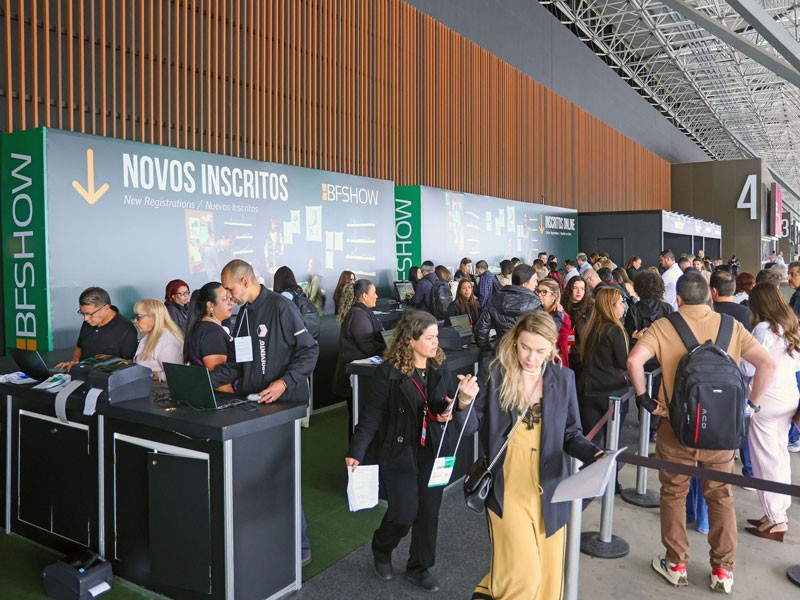
At the seventh edition of BFSHOW, held from November 10 to 12 at Distrito Anhembi in São Paulo, the Brazilian Footwear Industry and Trade Association (Abicalçados) presented an overview of the sector, shaped by export difficulties, rising Asian imports and weakening domestic demand.
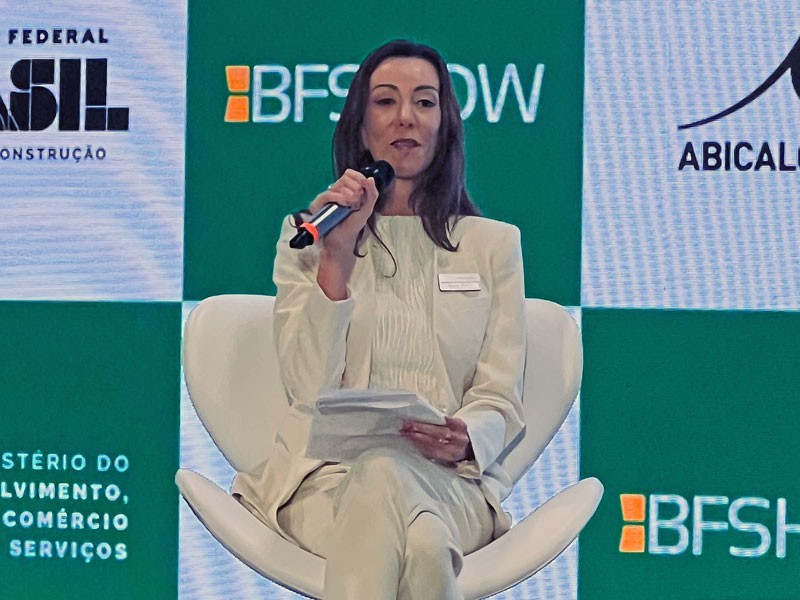
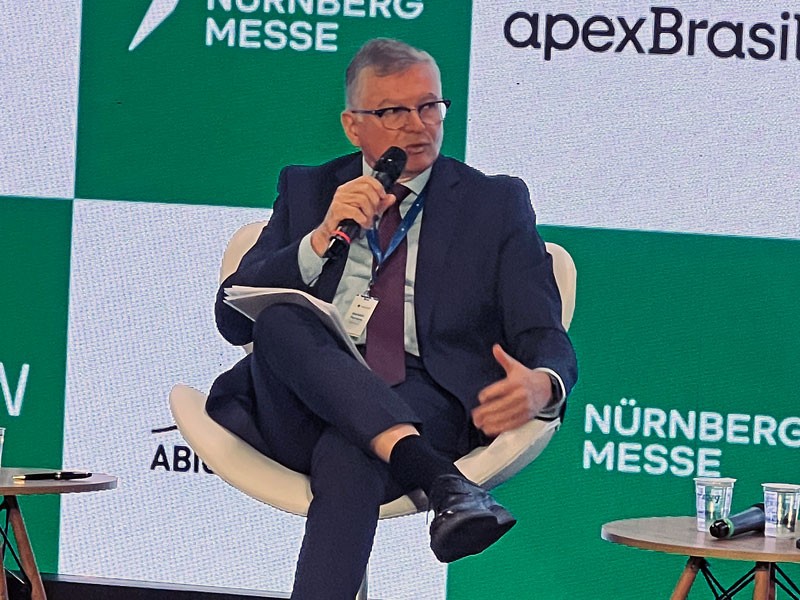
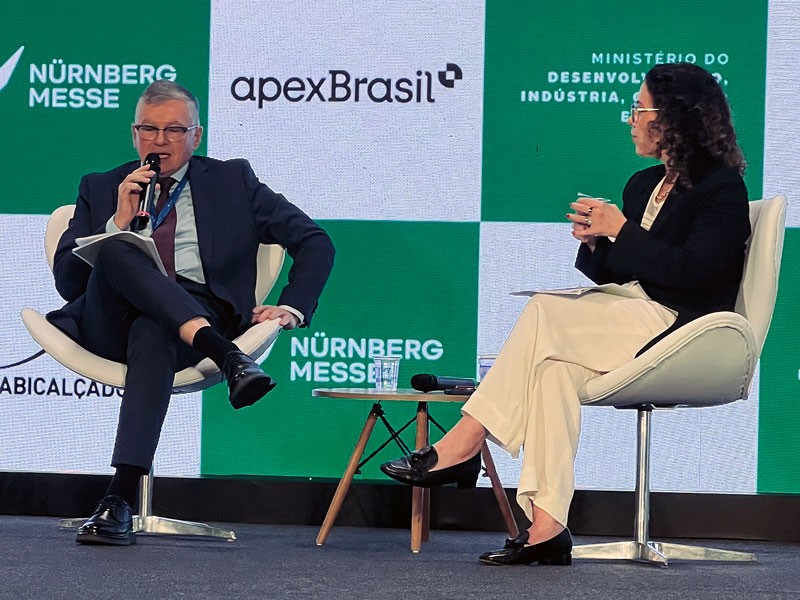
The presentation featured Haroldo Ferreira, Executive President of Abicalçados; Nadja Bento, Chief Operating Officer of NürnbergMesse Brasil; and Márcia Nejaim, head of the Southeast office of the Brazilian Trade and Investment Promotion Agency (ApexBrasil).
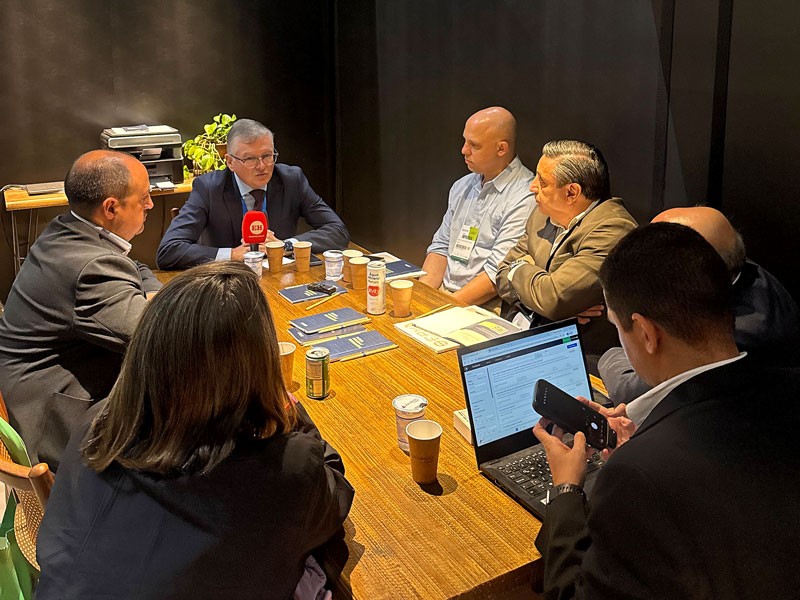
After the press conference, Ferreira took part in a discussion with journalists, including SERMA, expanding on trade negotiations, international market conditions and the challenges facing Brazil's footwear industry in 2027.
Haroldo Ferreira identified U.S. tariffs and Argentina's economic crisis as two of the main factors affecting Brazilian footwear exports.
The tariff burden imposed by the United States reached 37.5%, prompting Abicalçados in July to revise its projected decline in exports for 2026 from 3.6% to 7.1%.
According to Ferreira, without the difficulties in the United States and Argentina, the sector's two leading foreign markets, Brazilian footwear exports would have grown by 3.8% in 2026.
The executive also addressed the political landscape following the re-election of Luiz Inácio Lula da Silva and the U.S. congressional elections. In his view, these developments could favor a new round of negotiations with Donald Trump's administration.
Abicalçados is maintaining discussions with Brazilian authorities, particularly the ministries of Development, Industry, Trade and Services and of Foreign Affairs, seeking to have footwear included among the exceptions to the tariff measures.
Ferreira noted that U.S. importers themselves have opposed the restrictions and remain interested in working with Brazilian manufacturers. Many brands develop specific products and place initial orders for several thousand pairs before expanding their business, an arrangement suited to Brazil's capacity to manufacture smaller production runs.
He cautioned, however, that any tariff reduction would not lead to an immediate recovery in exports, given the time needed to reorganize orders and collections.

The increase in imports is another major problem facing Brazil's footwear industry, particularly due to the entry of products from Vietnam, Indonesia, and China.
Ferreira stated that, between January and October 2026, conventional imports and those made through international e-commerce platforms jointly exceeded US$1 billion, generating a sectoral trade deficit of nearly US$400 million.
Abicalçados criticized the tax differences between products imported through small shipments and those manufactured domestically. The association is calling for the reinstatement of the so-called taxa das blusinhas, the popular name for a 20% federal tax that Brazil applied to international online purchases of up to US$50, which was eliminated in 2026.
Although these transactions remain subject to a state-level tax (ICMS) ranging from 17% to 20%, Abicalçados considers that the elimination of the federal levy creates unequal competitive conditions for Brazilian manufacturers. The association is also calling for trade defense measures against certain Asian imports.
These measures include antidumping mechanisms related to China and initiatives involving other suppliers, such as Indonesia.
Import pressure, together with declining exports and contracting domestic consumption, is also reflected in industrial production and employment.
| Indicator | Reported Figures | Year-on-Year Change |
|---|---|---|
|
Exports, January–October |
87.8 million pairs, worth US$708.4 million |
↓ 6.2% in pairs ↓ 13.5% in value |
|
Conventional imports, January–September |
36.6 million pairs, worth US$491.25 million |
↑ 9.1% in pairs ↑ 12.5% in value |
|
Production, January–September |
— | ↓ 5.3% |
|
Domestic consumption, January–September |
— | ↓ 4.3% |
|
Industrial employment, September |
270,000 direct jobs | ↓ 6.2% year-on-year |
Source: Abicalçados. Changes are calculated against the corresponding periods of 2025. Additionally, the industry lost 7,000 jobs during the six months preceding September. Conventional imports are included in the total exceeding US$1 billion mentioned above.
Domestic market performance was linked to household debt, high interest rates and the reduced availability of income for consumer purchases.
In this context, Ferreira viewed the federal government's ban on fixed-odds electronic betting, commonly known in Brazil as bets, as a positive development. The measure was introduced through Provisional Measure No. 1,394 in September 2026.
According to the executive, the measure could help reduce household indebtedness and free up resources for other spending, including footwear.
This remains an expectation of the association, and its impact on sales has not yet been established through consolidated industry results.
Conditions in the main Latin American markets also received considerable attention.
In Argentina, the second-largest destination for Brazilian footwear exports, shipments declined by 43.7% in pairs and 52% in value between January and September 2026 compared with the same period of the previous year.
Ferreira expressed concern about Argentina's trade liberalization and growing competition from international suppliers, which are hindering a recovery in Brazilian shipments.
Regarding Colombia, he highlighted the longstanding trade relationship, cultural similarities and acceptance of Brazilian footwear among consumers. These factors underpin efforts to increase exports to that market.
As for Chile, he acknowledged Brazil's loss of market share amid the advance of Asian suppliers. He explained that Brazil's strategy is not based solely on price competition but on developing differentiated products with greater added value, design, quality and production flexibility.
The executive also pointed to sustainability as a commercial factor, particularly through the Origem Sustentável program, developed by Abicalçados and Assintecal, which certifies environmental, social and management practices throughout the production chain.
With regard to Peru, he identified opportunities arising from improved logistics connections with the Pacific, while warning that expanding these routes could also facilitate the entry of imported products into Brazil.
For 2027, Abicalçados is considering new trade missions to Chile, Colombia and Peru, aimed at strengthening ties with buyers, distributors and retailers.
In contrast to the difficulties in the United States and Argentina, Ferreira emphasized the growth of Brazilian footwear exports to the European Union.
Between May and October 2026, shipments to the bloc increased by more than 35% compared with the same period a year earlier, against the backdrop of the Mercosur–European Union trade agreement, which provides for a gradual reduction in tariffs.
The executive nevertheless clarified that gains in Europe have not yet offset losses in the sector's main traditional export markets.
For her part, Márcia Nejaim highlighted the initiatives carried out by ApexBrasil and Abicalçados through Brazilian Footwear, a program supporting manufacturers' internationalization through market intelligence, training, trade fair participation, business missions and connections with foreign buyers.
She said the agreement covering 2026–2028 provides for investments of R$48.9 million to strengthen exports and diversify markets.
Nadja Bento, Chief Operating Officer of NürnbergMesse Brasil, highlighted BFSHOW's development as a commercial platform and a training environment for retailers.
The fair brought together around 300 Brazilian footwear brands and had expected to welcome more than 10,500 domestic and international buyers from approximately 50 countries.
Among its main initiatives was the Buyer Program, the largest organized by BFSHOW to date, with more than 850 invited domestic and international participants, including over 200 foreign importers.
Bento also highlighted the introduction of Gallery, a space for premium brands seeking to build relationships with boutiques, multibrand footwear retailers and specialized importers.
The program included activities related to artificial intelligence, e-commerce and new sales tools, such as live commerce workshops with Mercado Livre and Grupo NSM, the AI Experience LAB and digital fashion shows generated using artificial intelligence.
Regarding business activity at the fair, Ferreira said there had been concerns ahead of the event because of the difficult economic conditions in Brazil.
However, the first two days showed encouraging progress, particularly from the afternoon of the opening day.
He estimated that business could remain at levels similar to, or slightly below, those of the previous comparable edition, also noting that the November event typically attracts fewer participants than the May edition.
Among the challenges for the coming year, Ferreira mentioned Brazil's tax reform and the difficulties its transition creates for planning prices and commercial terms.
He also referred to changes in working hours and the proposed end of the 6×1 work schedule (six days of work followed by one day off), in response to which Abicalçados has stressed the need to preserve legal certainty and take industrial costs into account.
For the end of 2026, the association maintains a forecast of an average 2.1% contraction in production.
In 2027, it projects baseline production growth of 0.5%, which could exceed 1.5% if the tariff dispute with the United States is resolved and domestic consumption conditions improve.
Do you represent a footwear industry chamber, association, or trade fair?
At SERMA, we offer communication solutions to promote institutional activities, trade fairs, conferences, and industry events through our print magazine, website, social media, and email marketing campaigns.
Explore Promotional Opportunities for Your Institution or Event →
RELATED ARTICLE:
- BRAZILIAN FOOTWEAR. In search of new buyers