SMEs call for urgent rescue measures

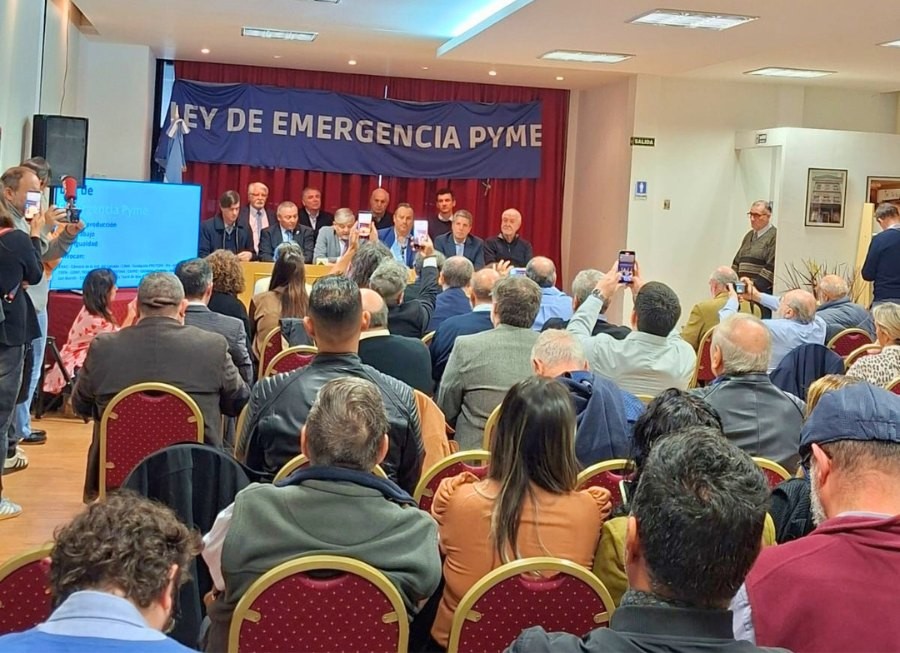
The press conference held on June 4, 2026, was an important act of unity within Argentina’s industrial SME sector. The meeting took place at the headquarters of the Chamber of the Footwear Industry (CIC) in Buenos Aires and served as a platform for the sector’s main organizations to urgently demand legislative debate on the National Rescue Law for MSMEs.
Among the convening entities were the country’s main industrial organizations linked to manufacturing activities, including textiles, footwear, apparel and others.
In a context of deep concern over the decline in domestic consumption, the opening of imports and rising operating costs, the entities aligned under the slogan “For more production, more jobs, more equality”.
The bill, which already has parliamentary status in Congress under the cross-party support of legislators such as Miguel Ángel Pichetto, Julia Strada and Sergio Palazzo, proposes declaring a tariff, tax, productive and labor emergency for an initial period of 365 days, with the option of extension.
Among the concrete measures requested by the chambers during the press conference were the following:
A 50% reduction in essential public service rates -electricity, piped gas and running water- used in the productive processes of micro and small enterprises.
A 50% reduction in the VAT rate applicable to these essential public services.
Cancellation of fines and interest reaching 100% for microenterprises, with extended payment plans of up to 60 or 72 installments and subsidized interest rates.
For medium-sized enterprises, Segment I, the reduction of fines and interest would be staggered between 50% and 75%.
Exemption from the Tax on Bank Debits and Credits, known as the Check Tax, and the creation of a Single Tax Account to improve companies’ liquidity.
Accelerated Payment Regime: the National State and its dependent companies would be required to pay invoices issued by MSMEs within a maximum period of 30 calendar days, in order to avoid breaking the payment chain.
Purchase Quotas: a mandatory reserve of 30% of public purchases for the MSME sector and a guarantee of 30% shelf space for their products.
Trade Incentives: exemption from export duties on the increase in foreign sales compared with the previous year and the elimination of import tariffs on critical industrial supplies and capital goods not manufactured in the country.
The proposal includes a specific legal tool to prevent the bankruptcy of companies in crisis. This mechanism would allow the suspension of tax and commercial enforcement actions and auctions while the debtor company negotiates a restructuring agreement with its creditors, always requiring, in return, the continuation of operations and the protection of formal employment.
In their sector diagnosis, the chambers emphasized that the manufacturing industry is the most exposed to the current combination of falling sales and rising fixed costs. They stated that the bill does not seek privileges, but rather a minimum preservation framework to prevent further job losses and the permanent closure of workshops and factories throughout the country.
Source: Honorable Chamber of Deputies of the Argentine Nation (HCDN)
RELATED ARTICLE:
- ARGENTINA: The footwear sector also urgently calls for the SME Emergency Law