Two-tone contrasts define polka-dot footwear and bags

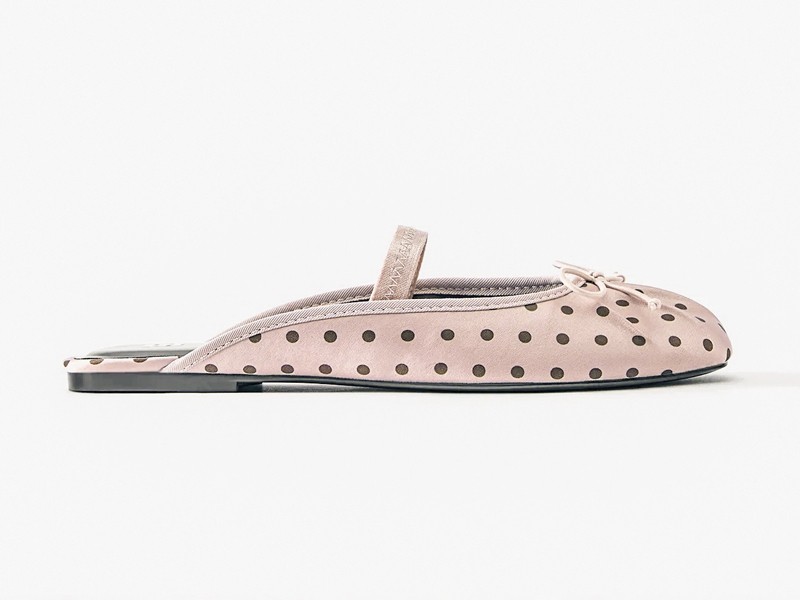
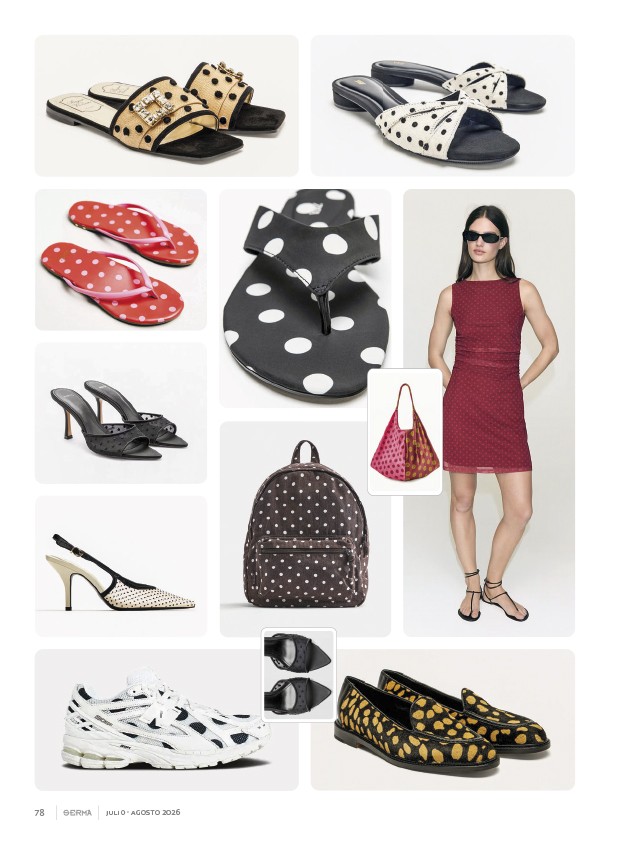
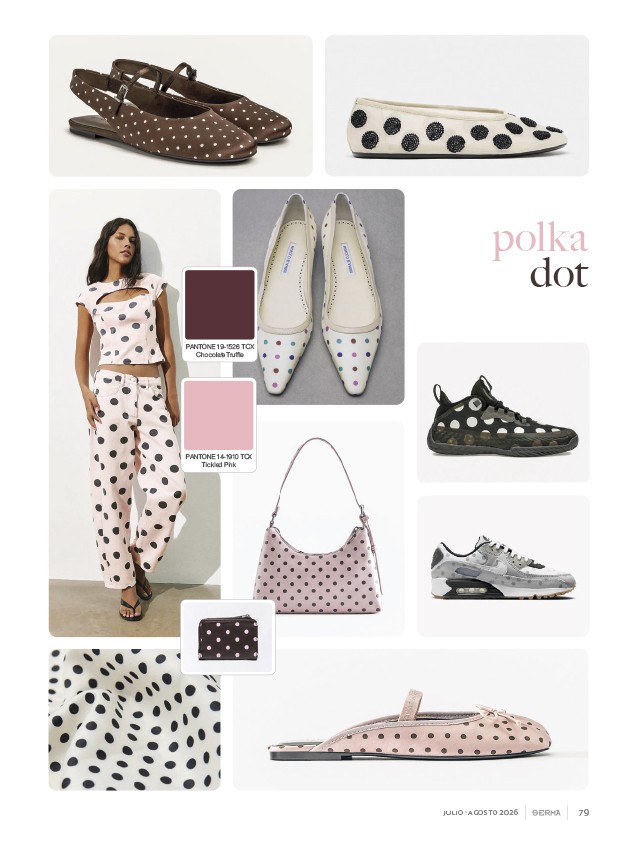
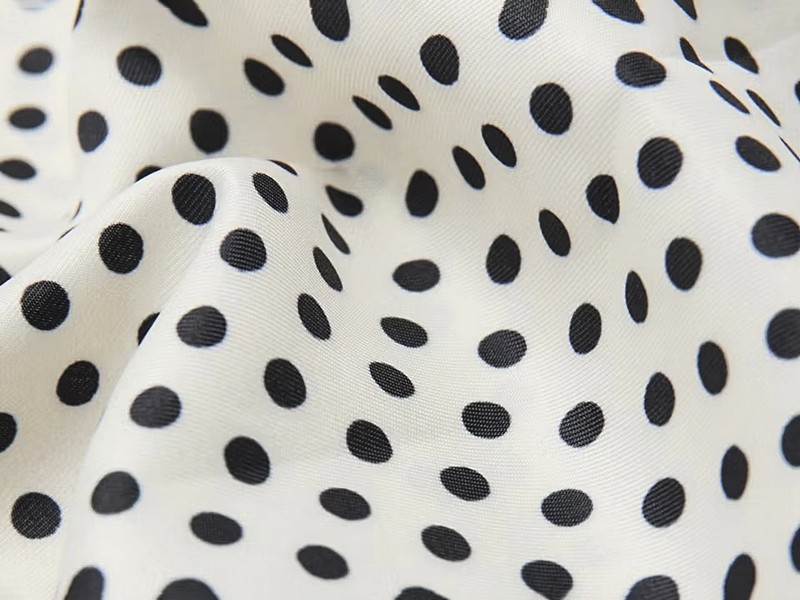
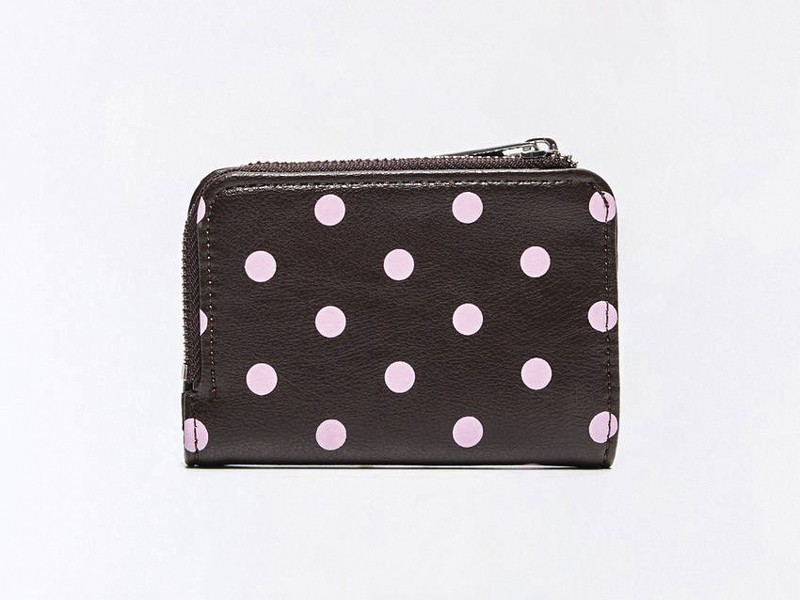
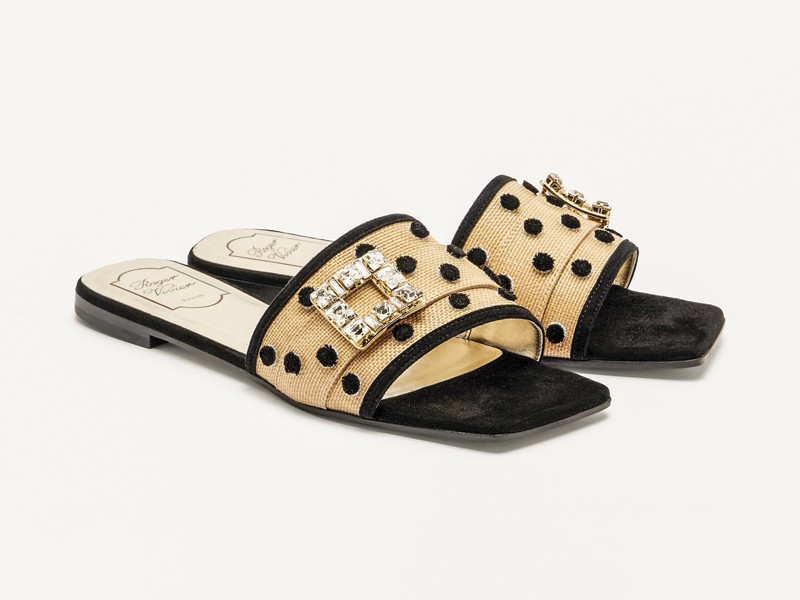
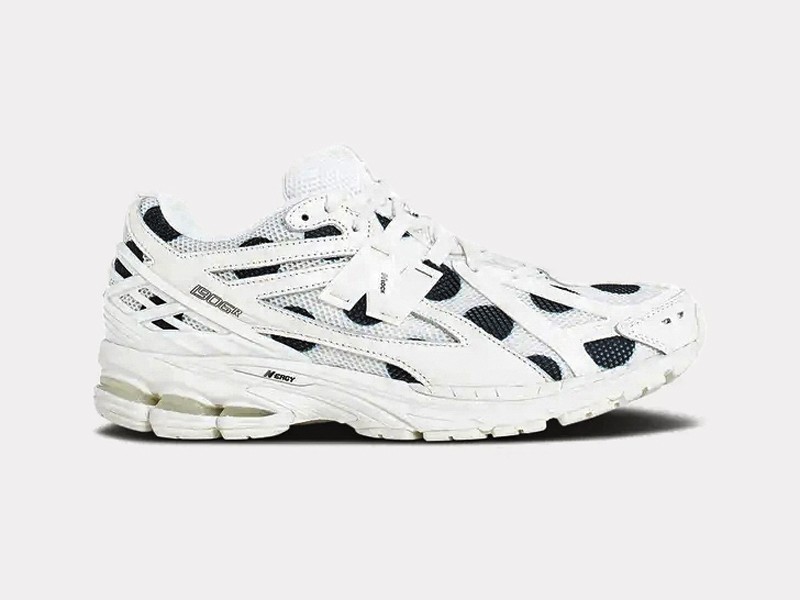
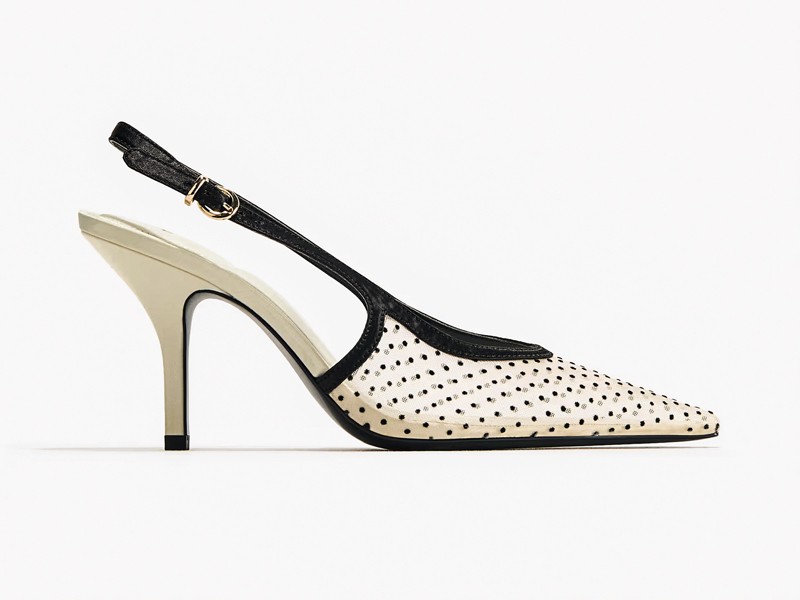
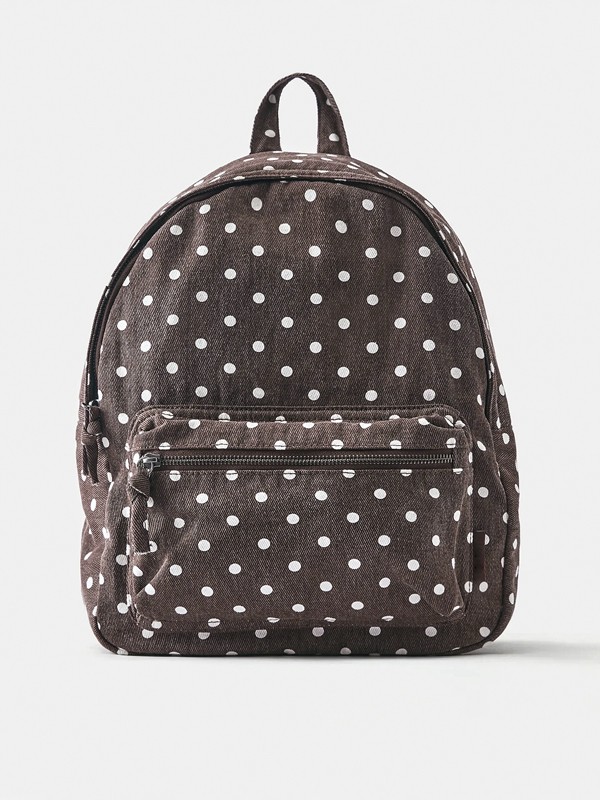
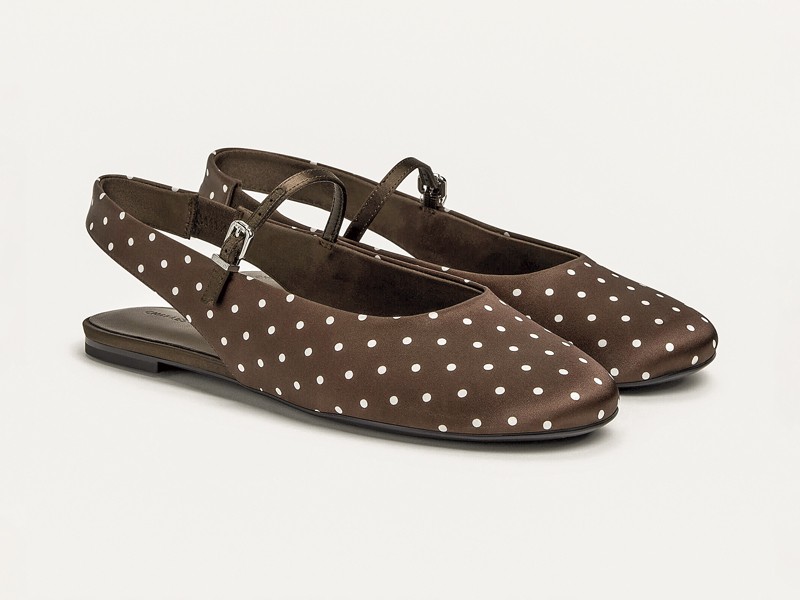
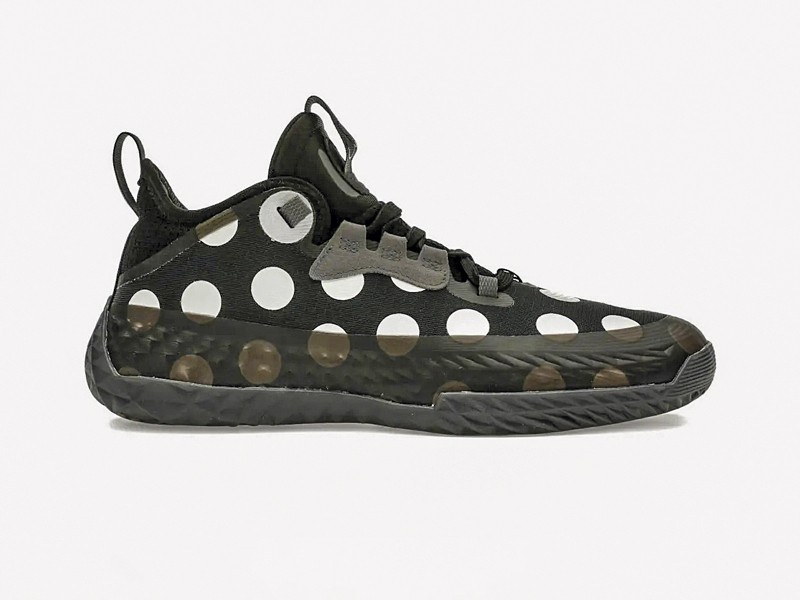
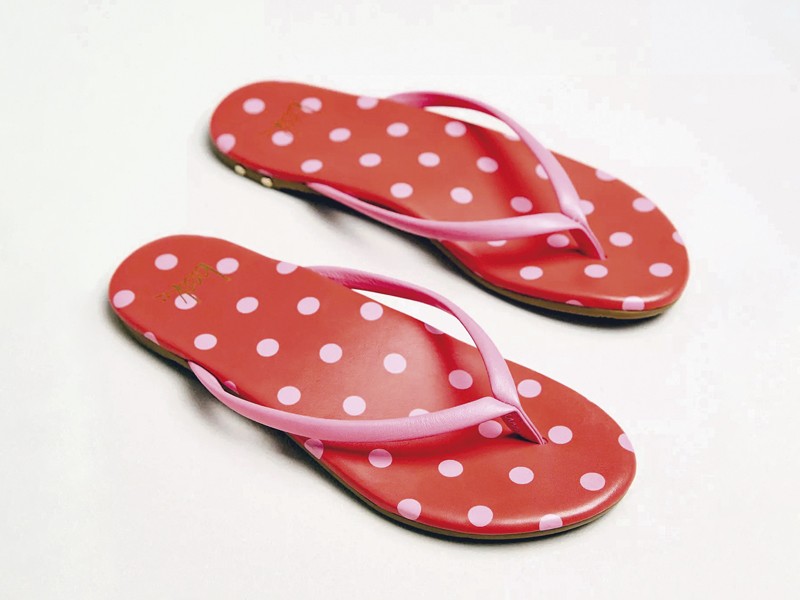
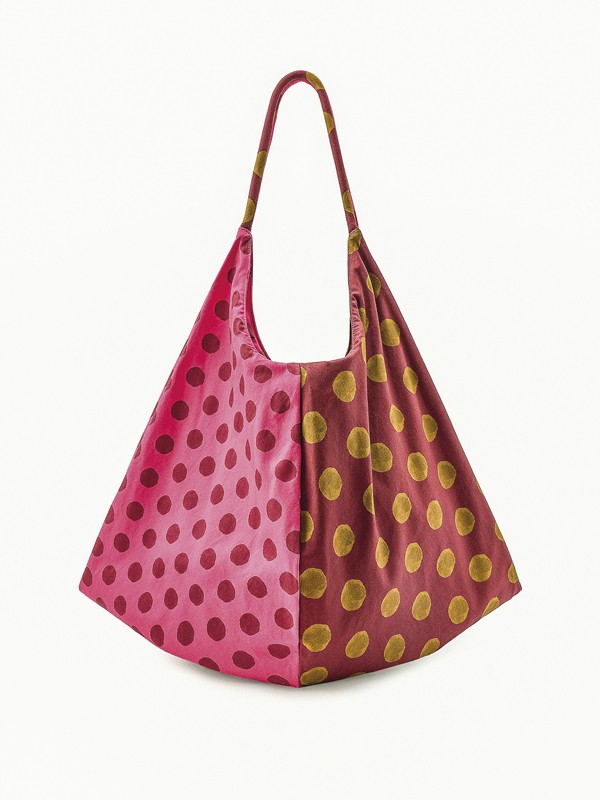
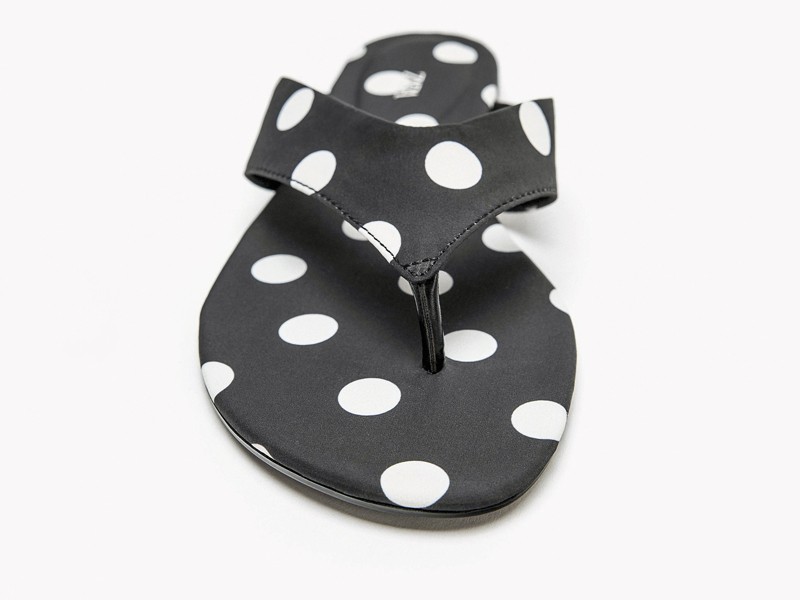
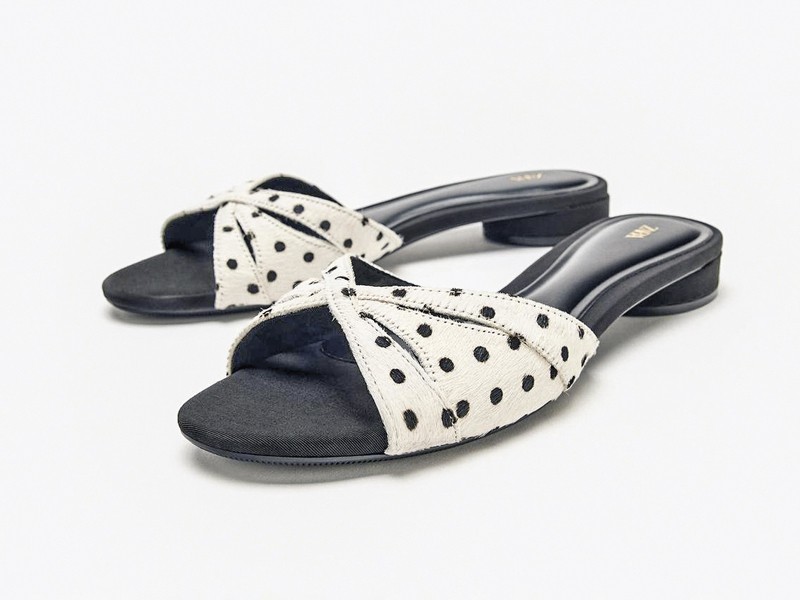
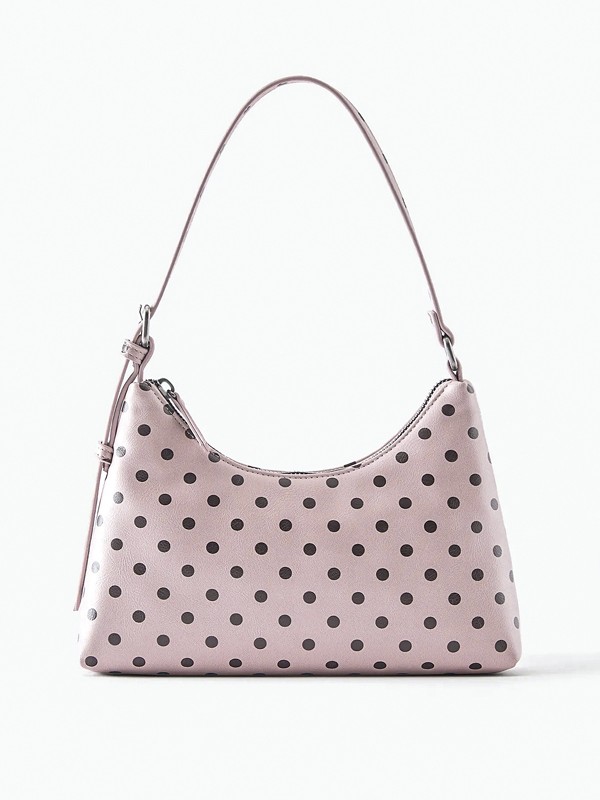
The reading begins with the relationship between two color areas. Black on white and white on black create direct inversions; red with white and yellow with black introduce more intense combinations; brown with light tones and pink with dark dots moderate the contrast. The circle retains a recognizable shape, but its presence changes according to the ground value, apparent size and distance separating it from neighboring dots.
Pantone 19-1526 TCX Chocolate Truffle provides a dark brown reference, while Pantone 14-1910 TCX Tickled Pink identifies a soft pink direction. Together with black, white, red, yellow, beige and off-white, these references make it possible to organize the selection by contrast before product type. This chromatic classification can be verified in the selection; the exact match between each material and a color standard must be confirmed by the responsible company.
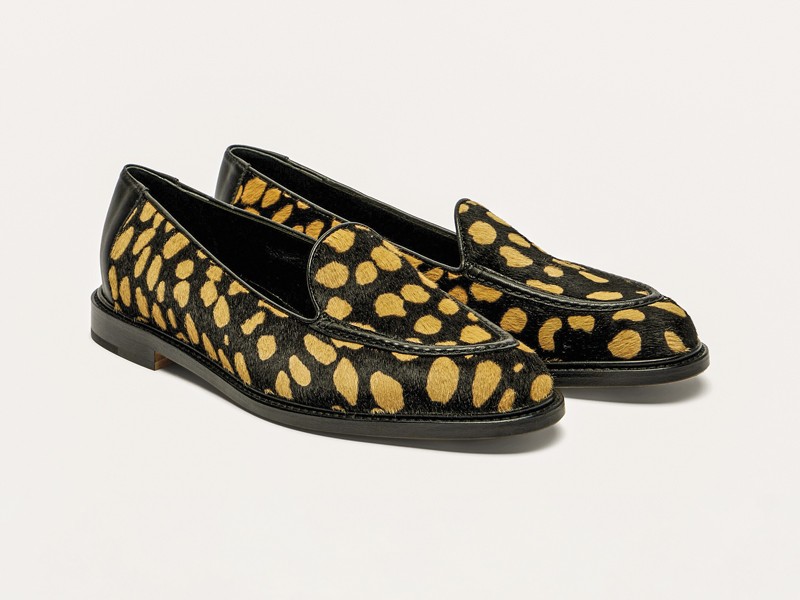
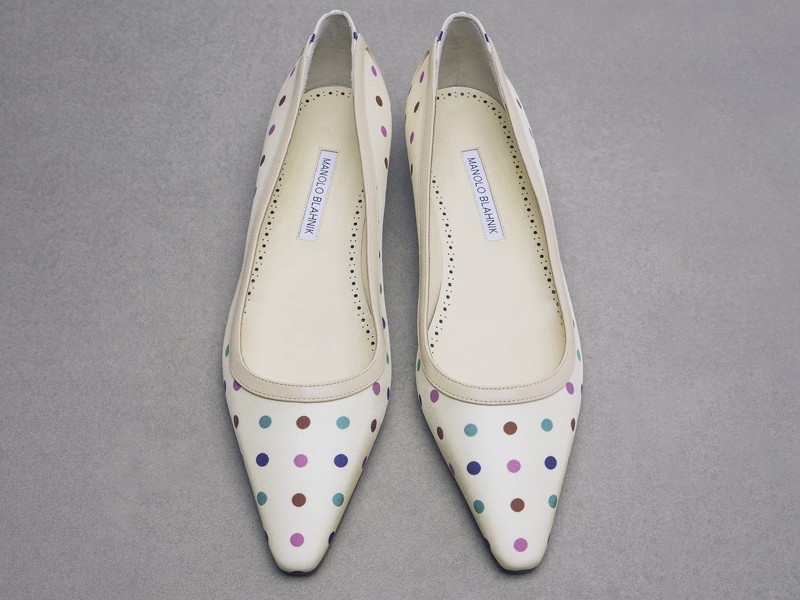
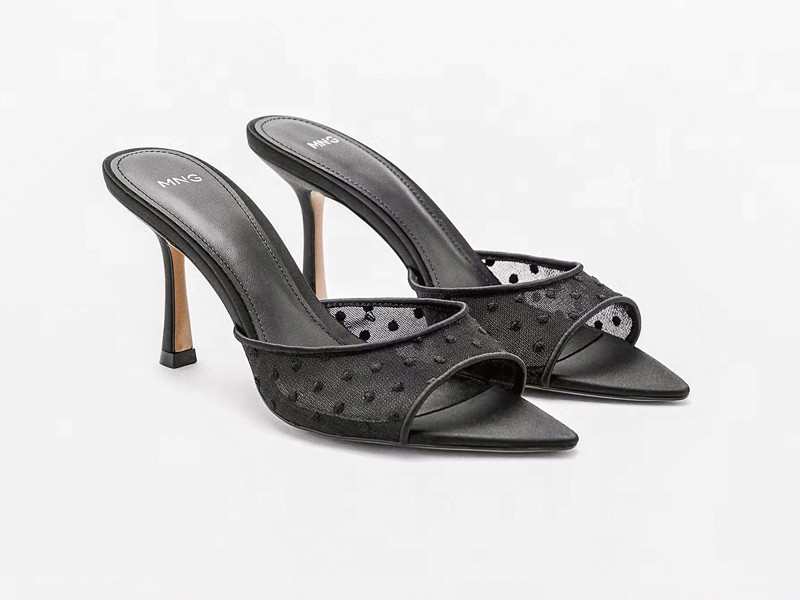
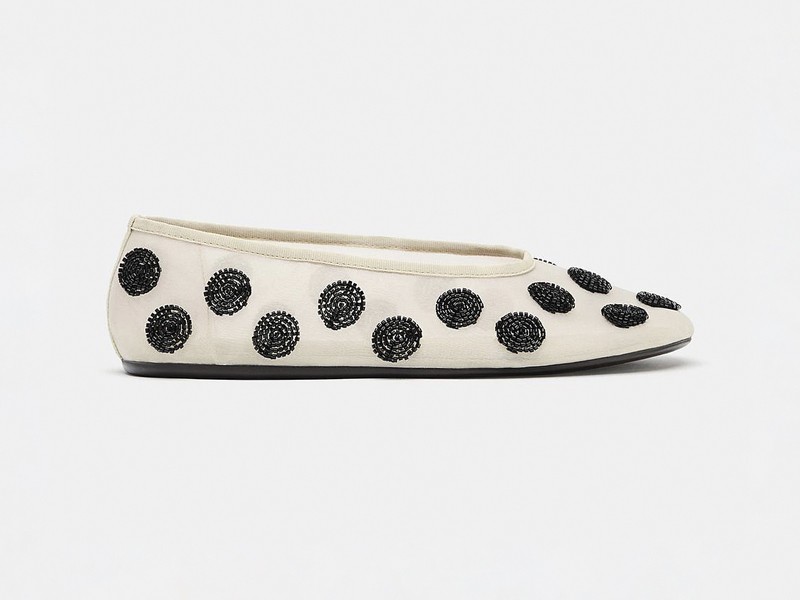
Small, closely spaced dots create continuous-looking surfaces across uppers, bag bodies and broad pieces. Larger circles leave more of the ground visible and establish a different cadence on ballerinas and sport-looking styles. Reduced-scale multicolor distributions and less regular motifs also appear, with variations in outline or distance between elements. “Polka dots” therefore describes a graphic family rather than one fixed repeat.
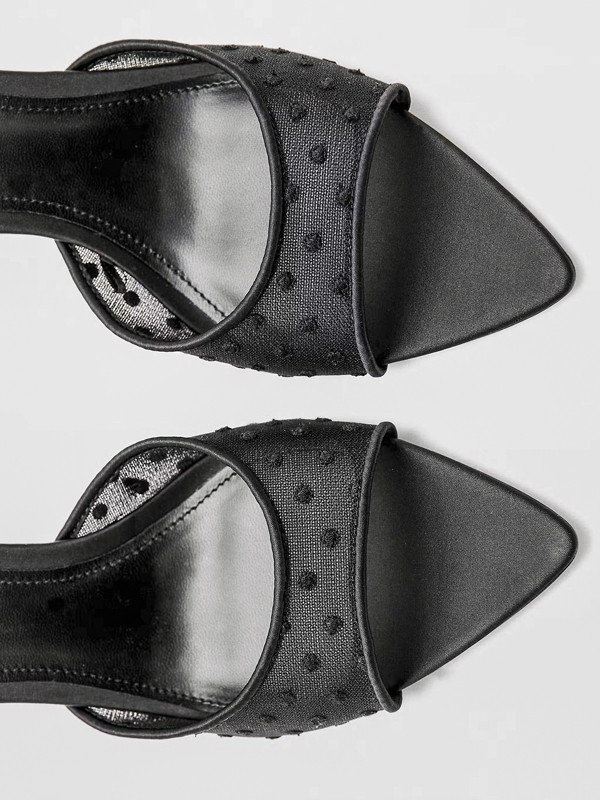
The available surface changes how much of the module can be shown. A wide vamp, closed upper or bag front provides a continuous area; a strap, piping or side piece displays a fragment. This difference should be recorded when defining motif size and the usable area of each piece, because the same repeat does not retain an identical reading at every scale. On some styles, the circles appear to belong to a print; on others, their appearance could result from cutouts, applications or another solution. Visual appearance does not verify the process, so technique and composition must be stated in the supplier's product information.
For suppliers of surface materials, printing or finishing services and upper developers, the specific opportunity is to present polka-dot families through a comparable specification. A product sheet can state ground and dot colors, diameter, spacing, repeat module, orientation, confirmed process, declared composition and suggested applications. An isolated sample communicates appearance; the sheet and a product application allow the development to be compared more precisely. These data allow footwear and bag manufacturers to evaluate variants without assigning properties that have not been tested.
Manufacturers and brands can transfer the same criterion to an assortment divided by contrast: black and white, intense combinations, and softened relationships using brown or pink. Each group can extend across open footwear, closed low shoes, sport styles and bags without requiring identical morphology. Comparing a sample, an upper panel and the finished product turns the polka dot into a documentable resource for sourcing, development, catalogs and commercial presentations.
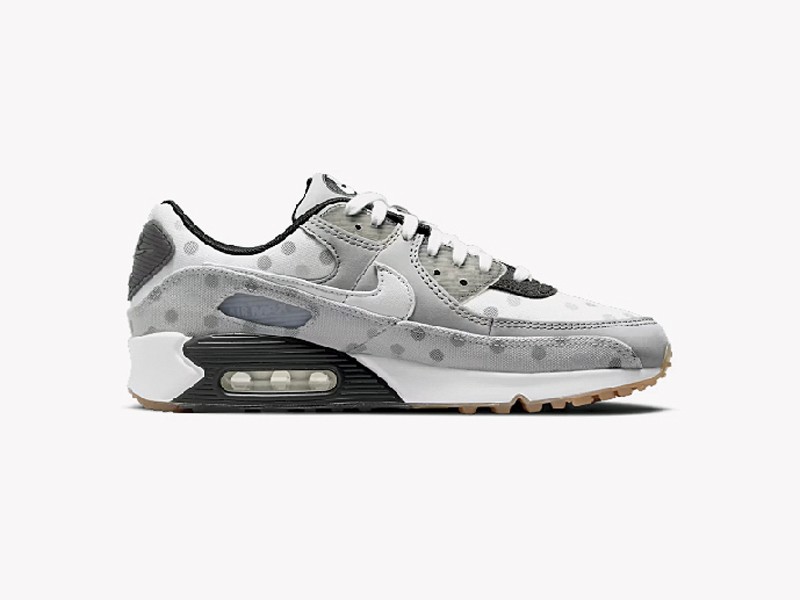


Suppliers of graphic surfaces, printed-looking materials, uppers and finishes, together with footwear and bag manufacturers, can present two-tone product sheets, samples and applications through SERMA.NET and SERMA's digital catalog. The inversion between dot and ground and its progression from sample to product can also be featured on Instagram @serma_net and Facebook SERMA, including collaborative posts with companies presenting specific sector proposals.
Contact: marketing@serma.net | WhatsApp: +54 9 351 394 8656