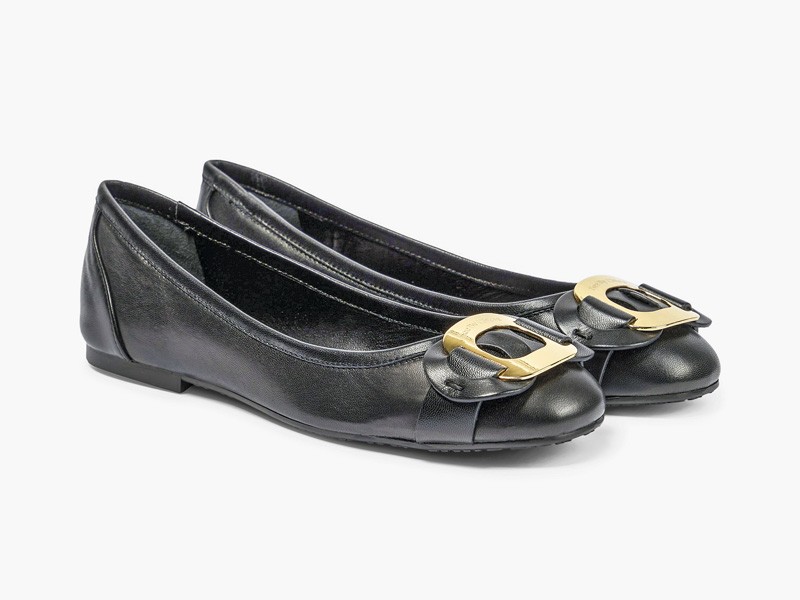
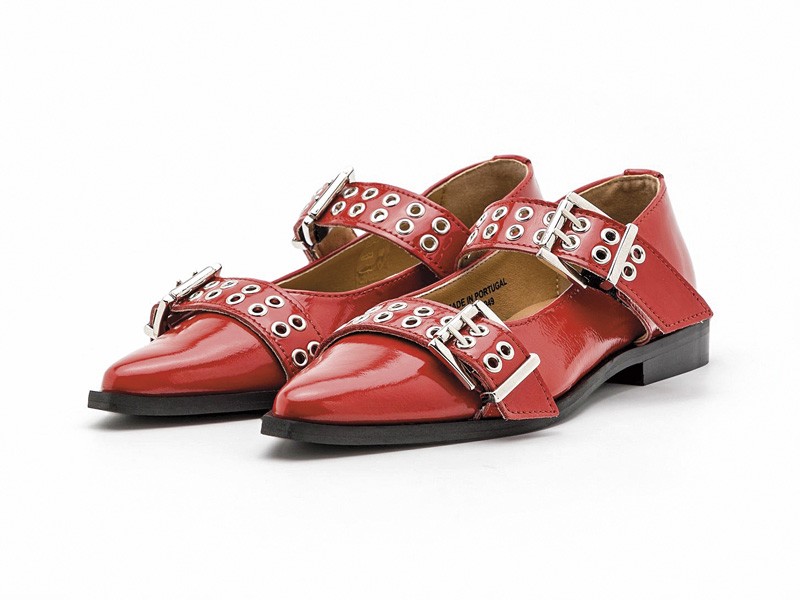
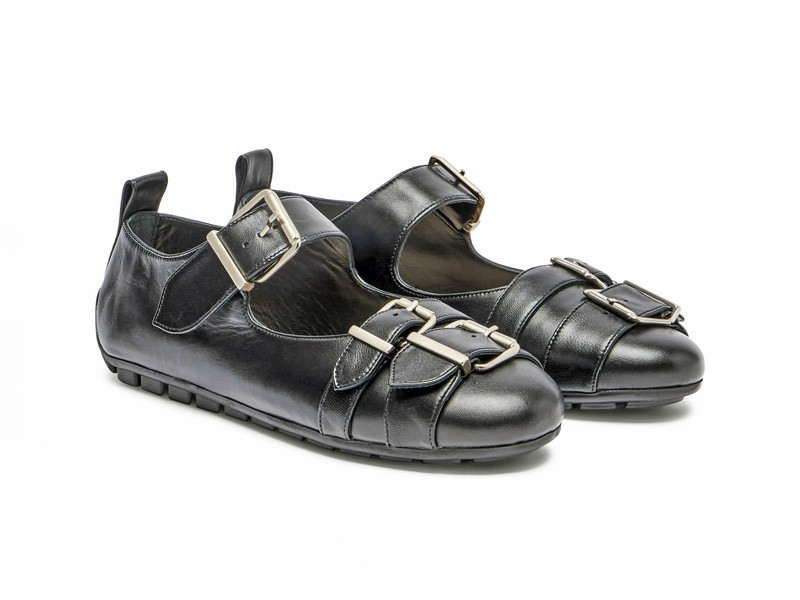
Low shoes with XL hardware on buckles and straps

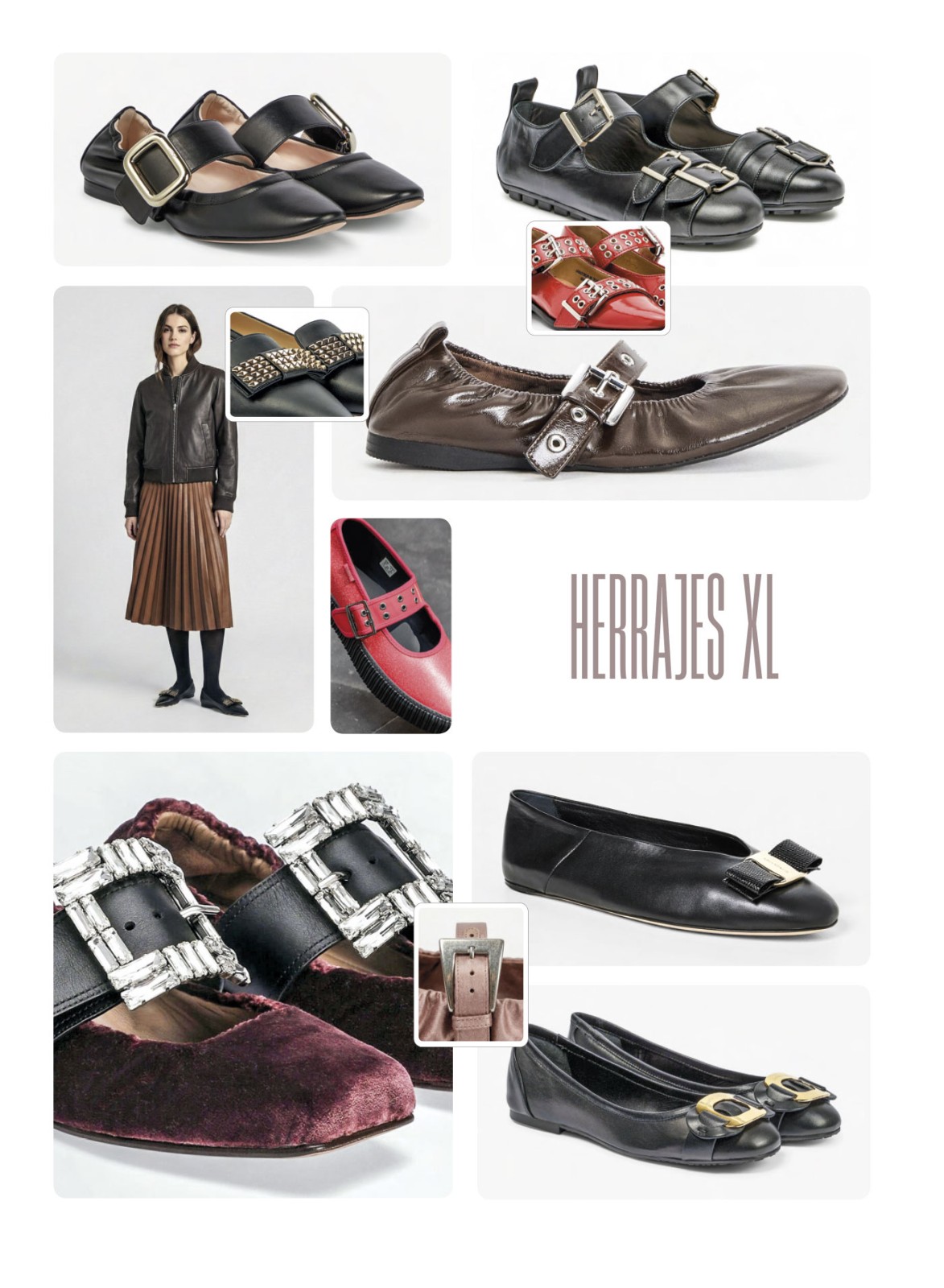
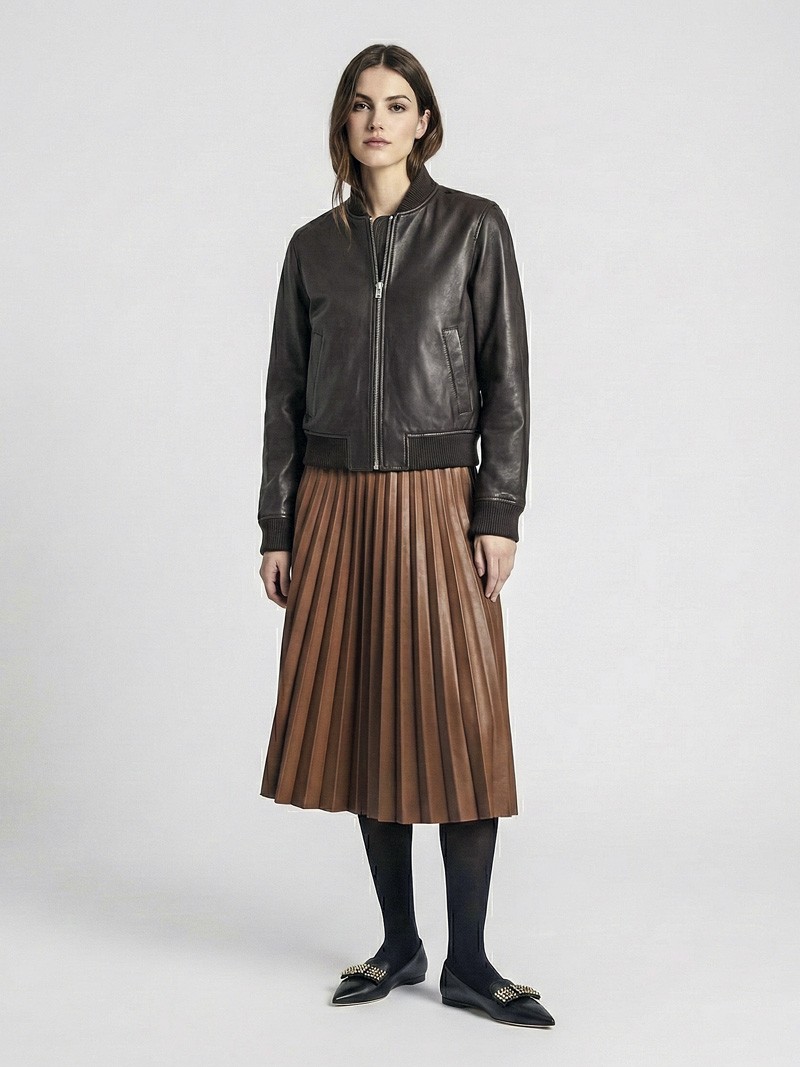
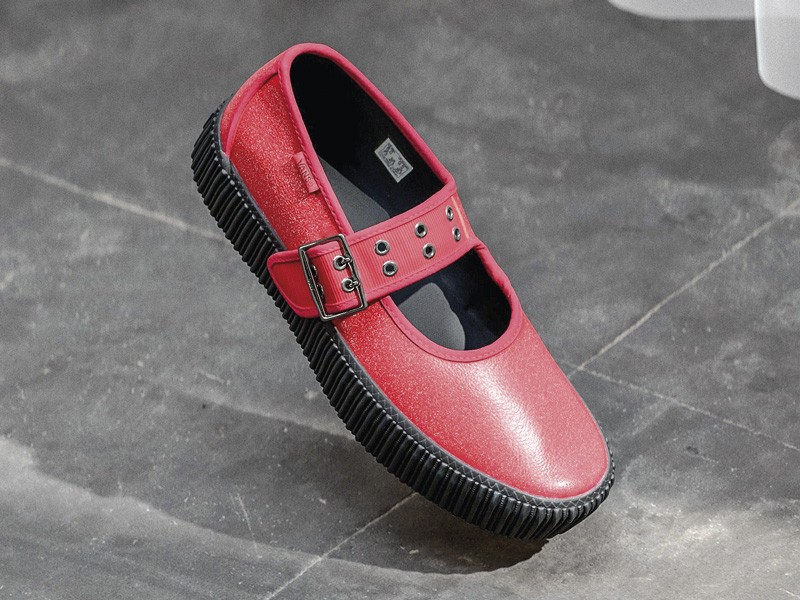
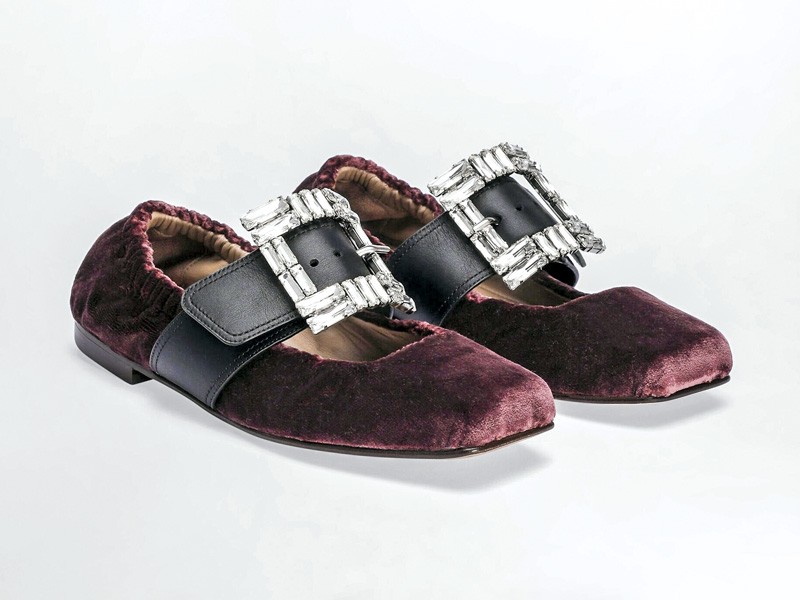
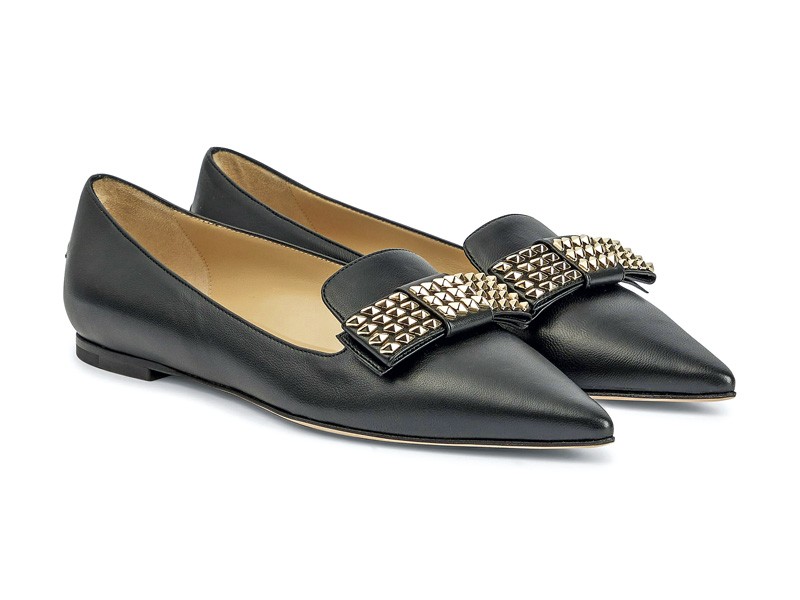
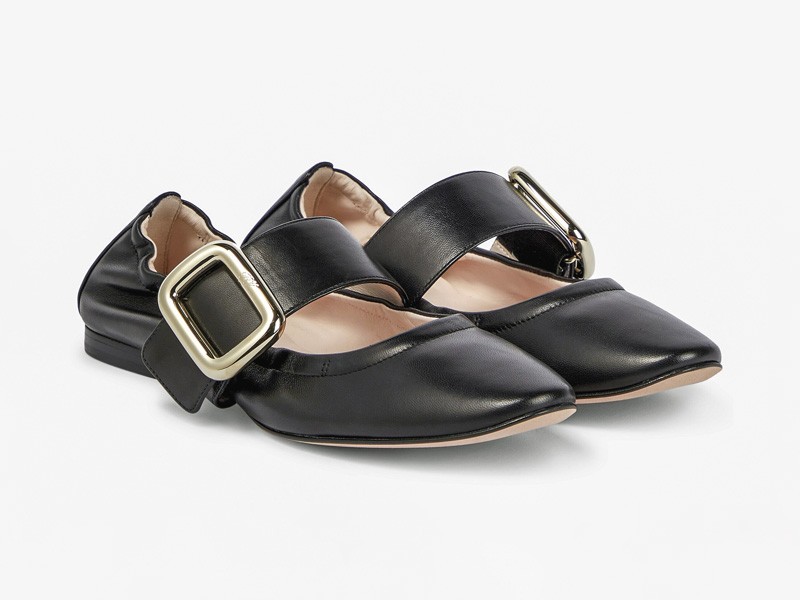
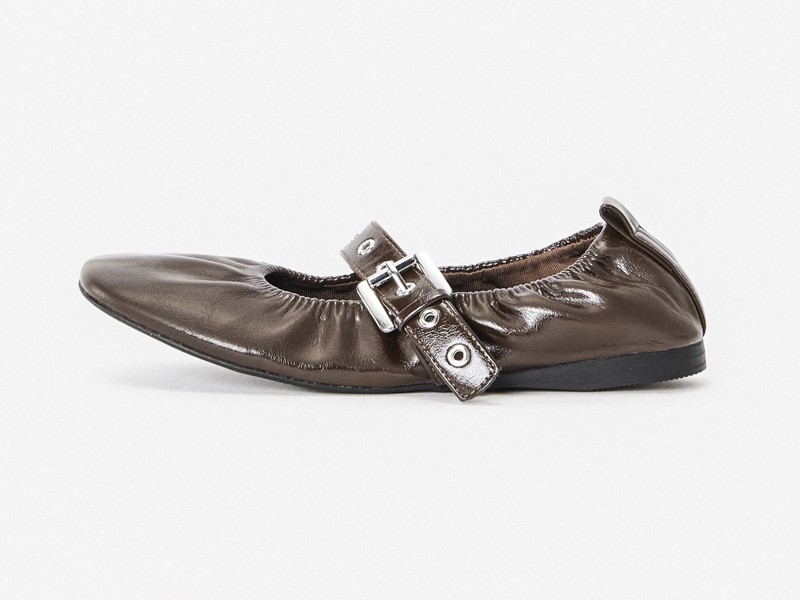
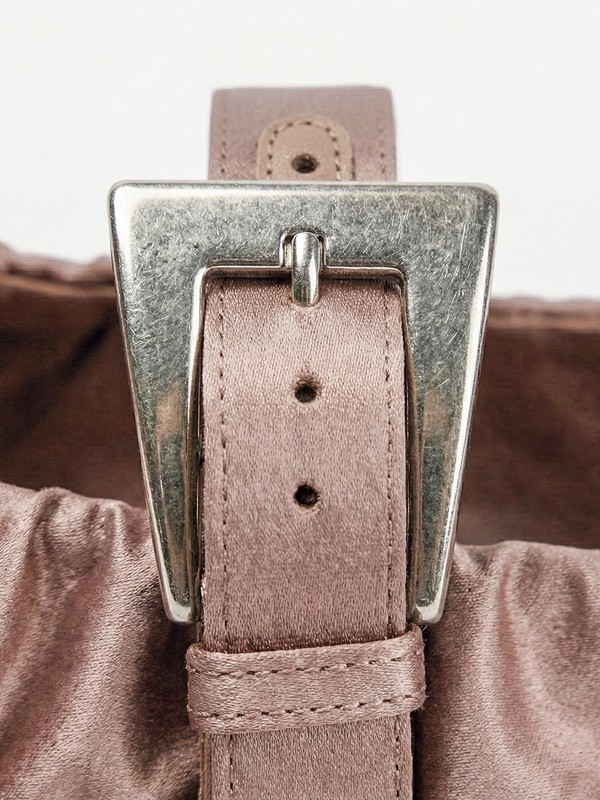
XL hardware grows in scale within low shoes, shifting attention toward buckles, straps and studs. Here, metal components work both as closure structure and as a visual focal point, applied on smooth uppers and on styles with layered straps.
Oversized buckles appear on single or multiple straps, including double/triple strap layouts and, in some cases, combinations with studs or decorative pieces that reinforce the hardware reading. The result stays within the closed-flat universe, but with a component load that reshapes the silhouette without changing the last.
In industrial development, the challenge is assembly: hardware anchoring points concentrate stress and require internal reinforcements across upper and lining. Straps must withstand repeated traction without edge deformation, making thickness, leather stability and rivet/stitch quality critical. Metal finishing choices also matter, as they define coherence with the broader collection and demand lot consistency across suppliers.
For buying and planning, XL hardware enables product variation through components: the same base can move across segments by changing buckle type, size, tone and strap configuration. This creates opportunities for hardware suppliers and high-impact urban capsules, with technical control focused on fixation, component weight and finish durability.