Straps and buckles shape uppers for summer sandals

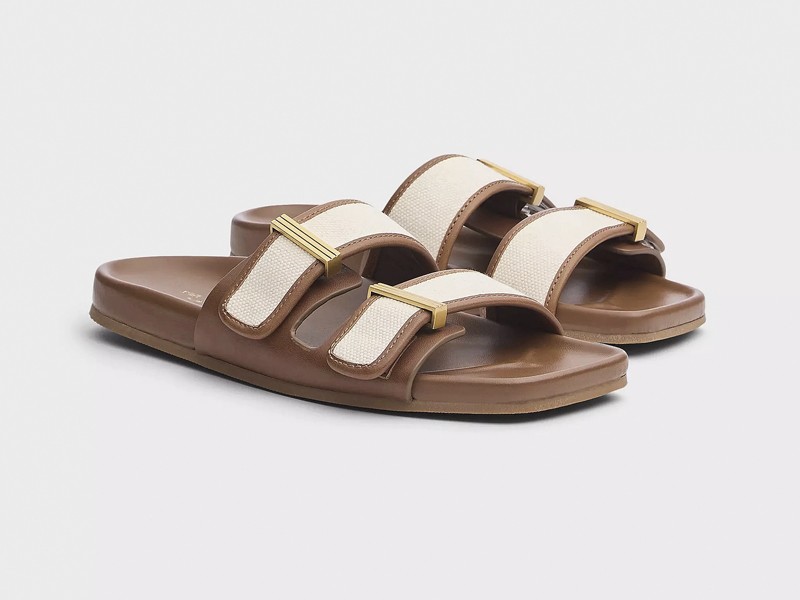
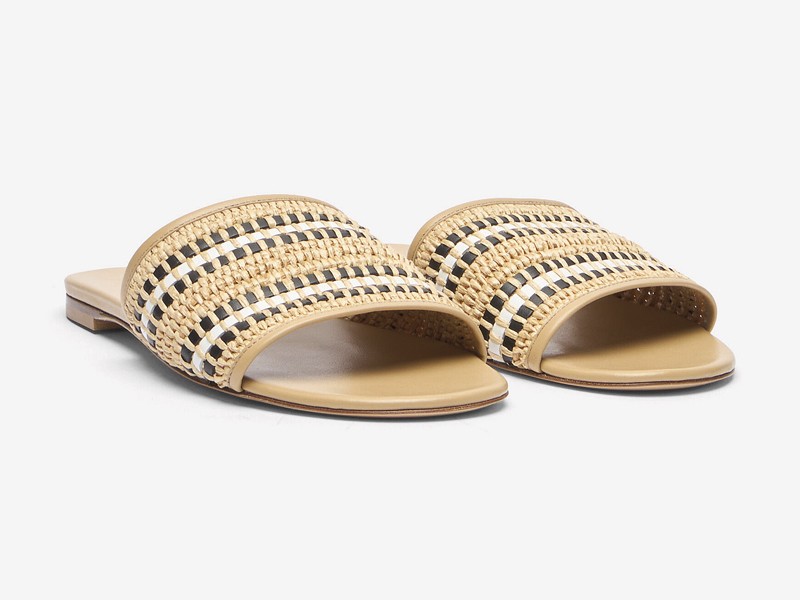
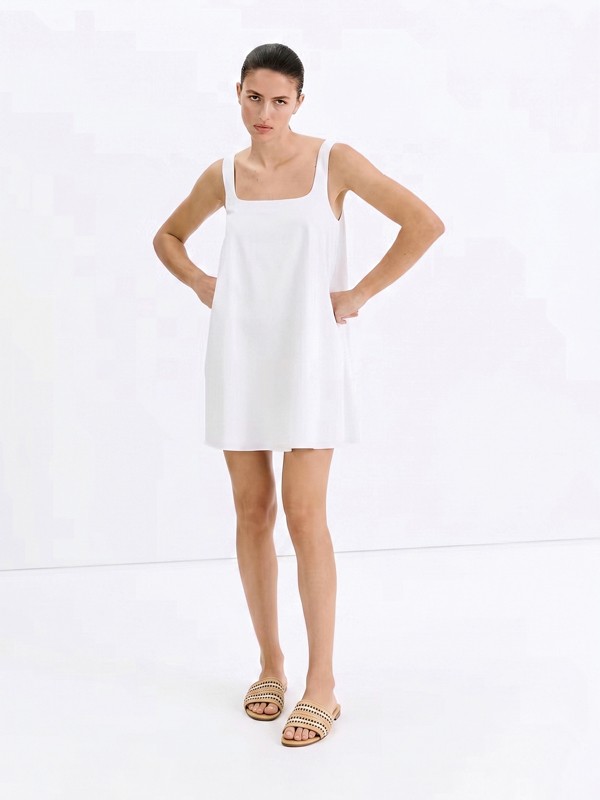
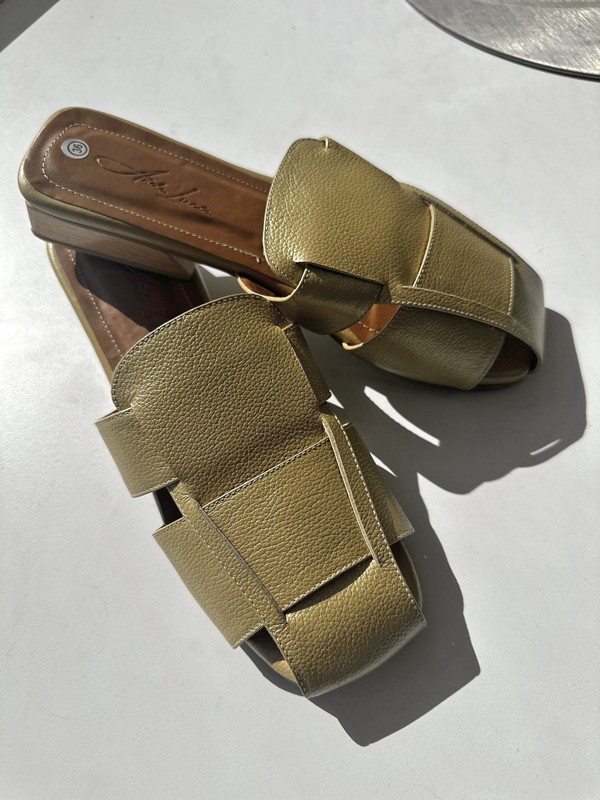
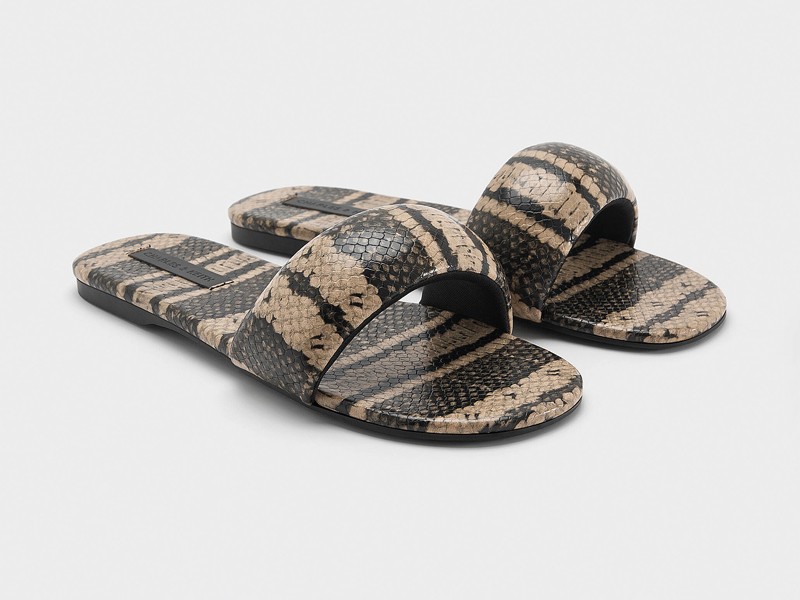
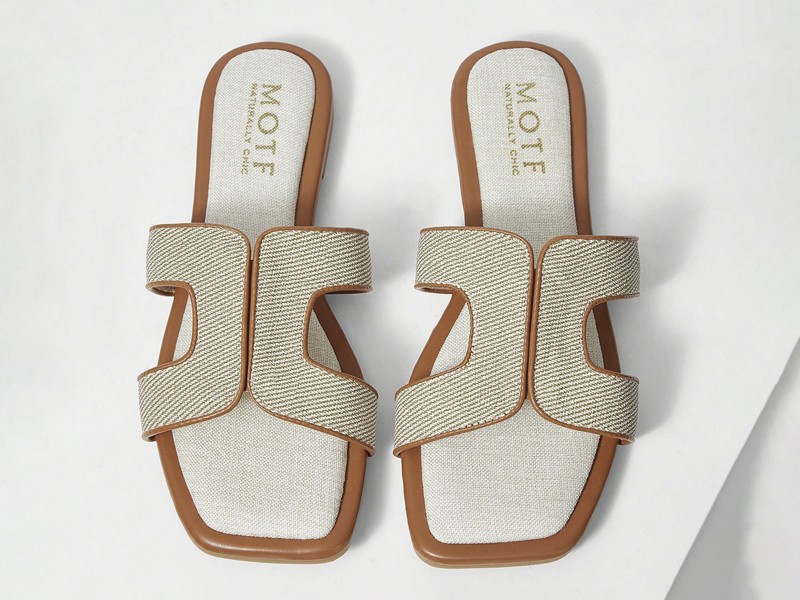
Within this open-footwear family, identity is concentrated in the upper. Wide straps, double bands, H-shaped pieces and instep crossings distribute coverage in different ways while leaving the toe and heel exposed. Variation does not come only from adding elements: it also depends on the width of each piece, the distance between bands and the relationship between the upper and the visible outline of the foot.
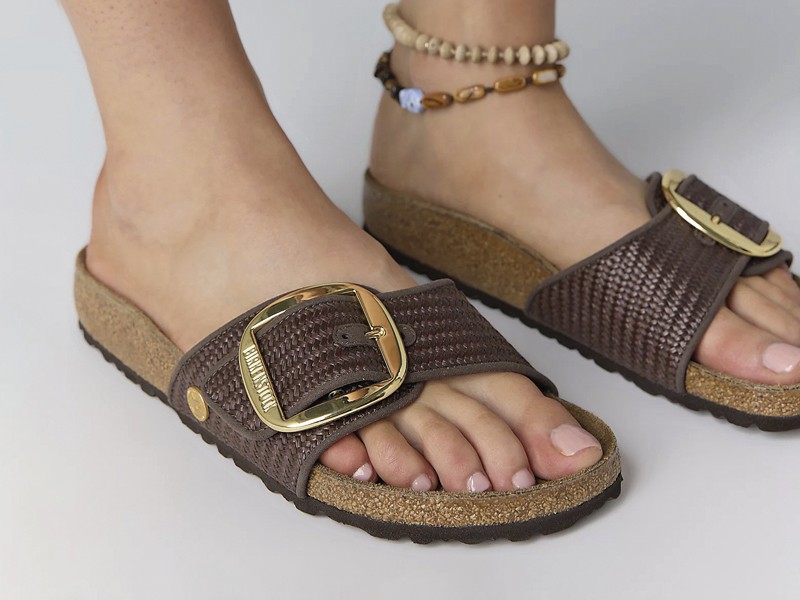
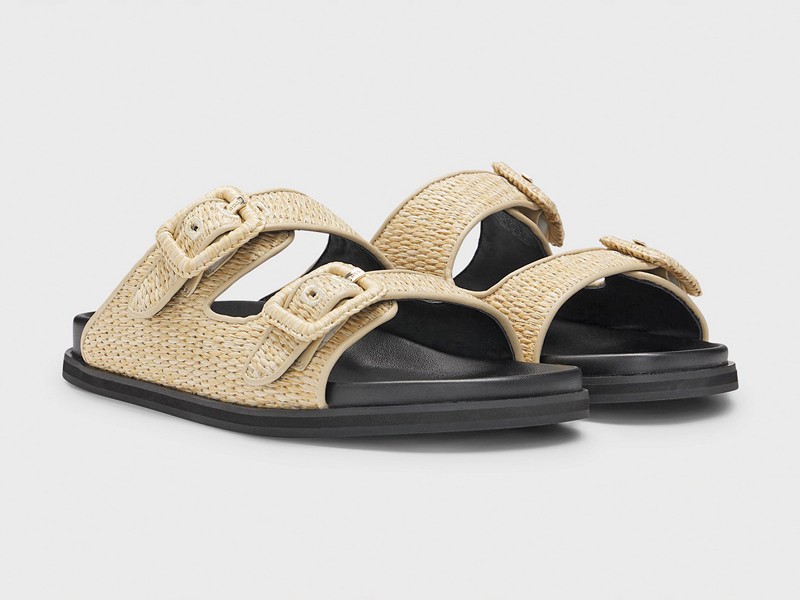
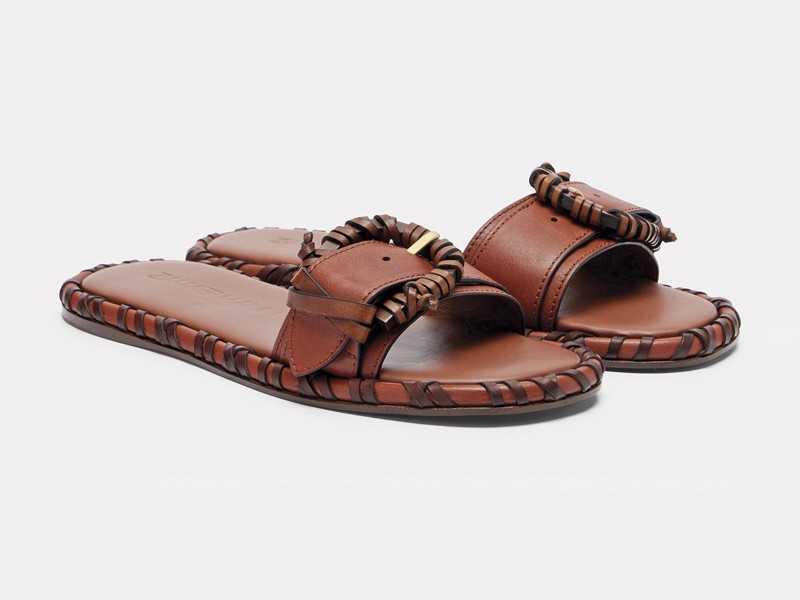
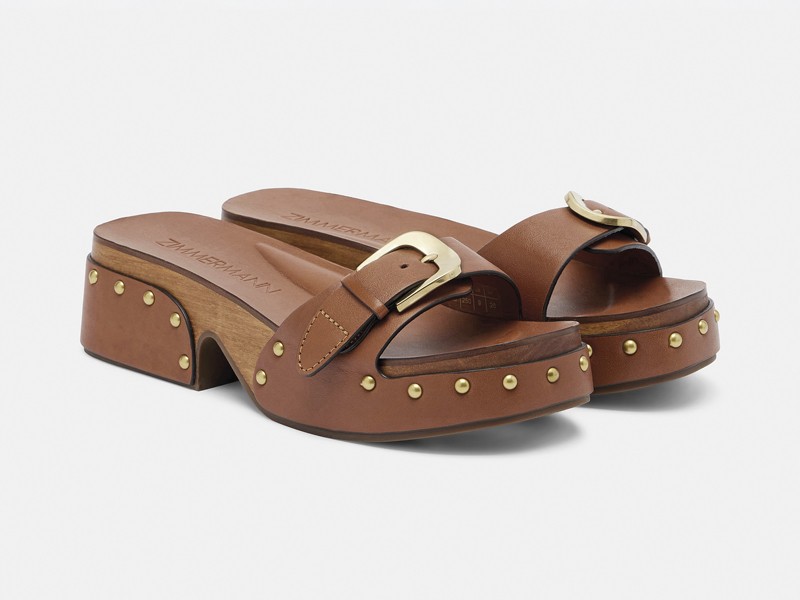
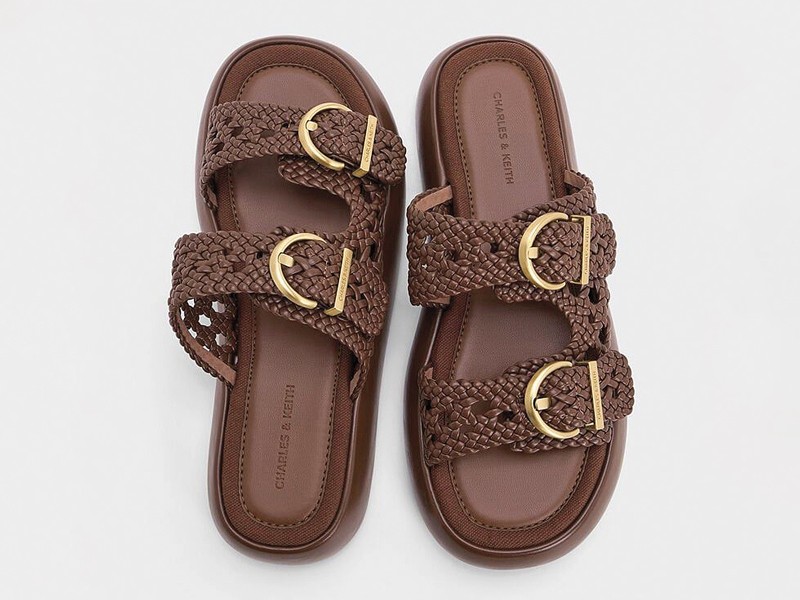
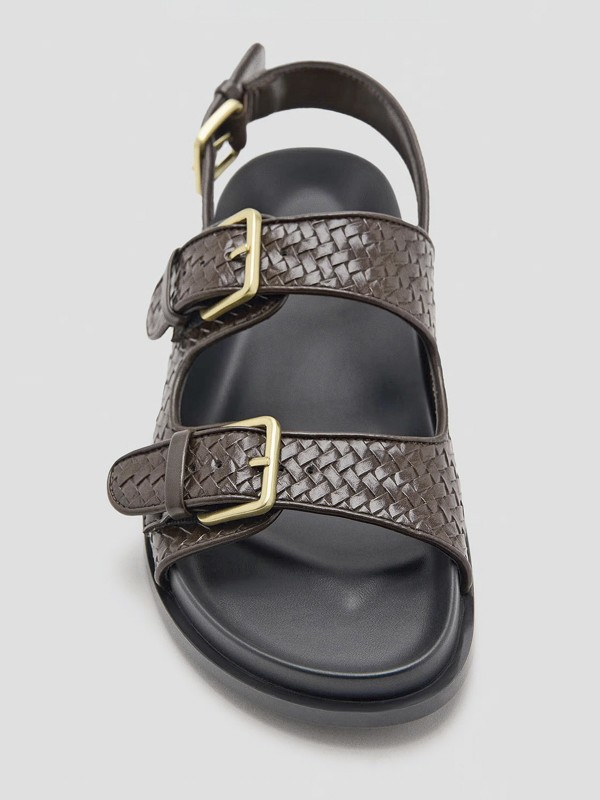
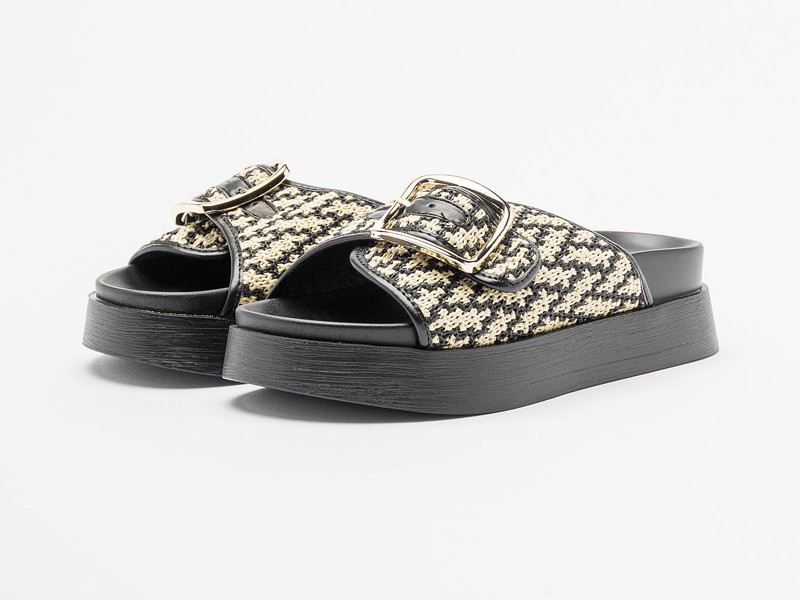
Buckles play a visual role within this architecture. They appear as focal points on double bands or as side accents on larger pieces. Other models dispense with hardware and resolve the upper through knots, crossings or one continuous band. This contrast allows a collection to be organized between cleaner versions and proposals with a higher density of components, without changing the open typology or repeating a single formal solution.
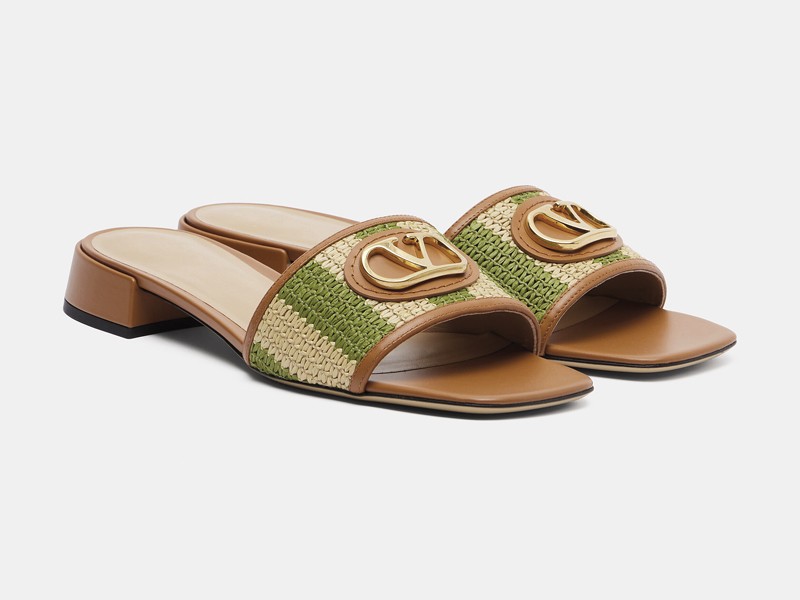
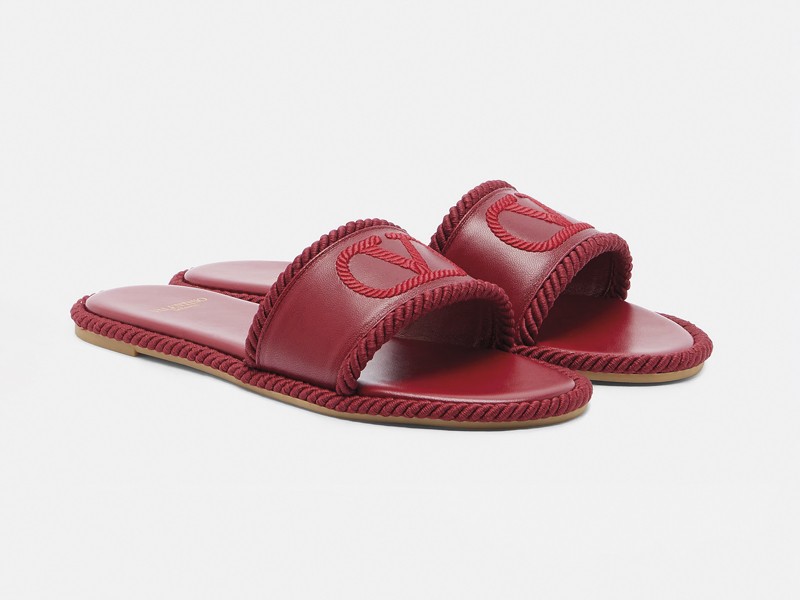
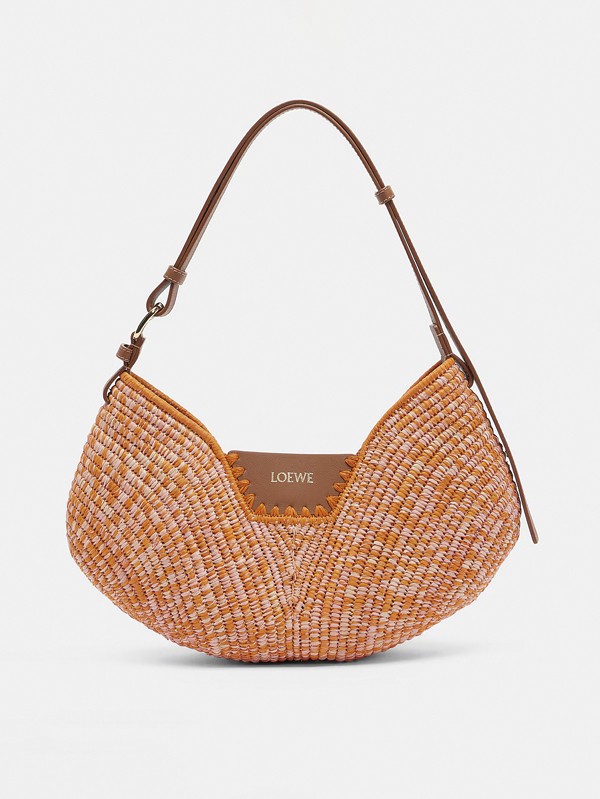
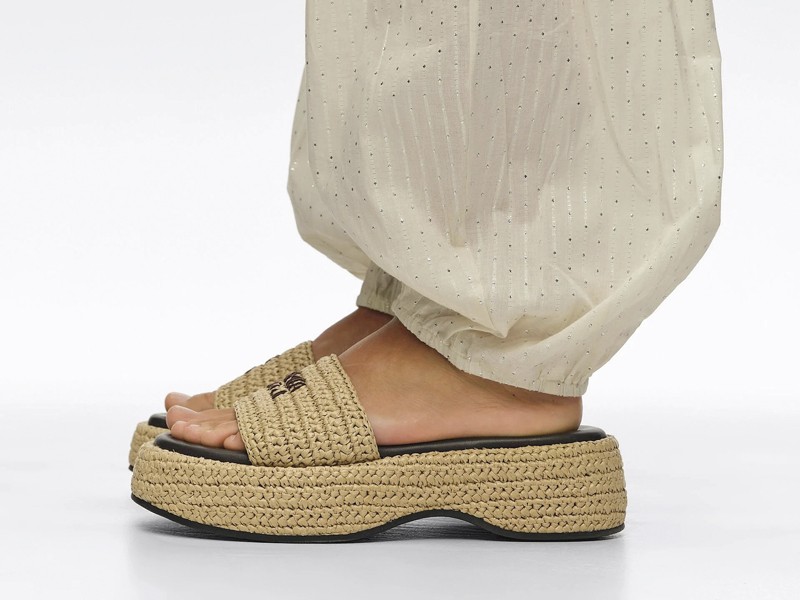
Surface treatment provides a second layer of differentiation. Woven-looking, interlaced, grainy and smooth appearances are present, together with two-tone combinations that reinforce the path of the bands. When the surface pattern is concentrated on the upper, the sole unit maintains a more stable reading; when the texture continues along the sidewall or platform, the product gains greater visual continuity. The specific material cannot be determined from appearance alone, so this analysis is limited to the visible effect.
The palette relies mainly on beige, sand, brown, olive, black and deep red, with gold-tone interventions on buckles and small details. Neutrals support the reading of texture and volume, while stronger colors shift attention toward the complete silhouette. This color distribution makes it possible to conceive coordinated families in which one visual base adapts to different uppers, or the same upper structure changes character through color, apparent texture and component contrast.
The range includes thin bottoms, medium-thickness profiles and low platforms. Dark soles outline lighter uppers; bottoms in tones close to the upper create a more integrated reading; and woven-looking side finishes visually connect the upper with the sole unit. Proportion changes as well: a broad upper over a thin bottom concentrates attention on the instep, while a more visible base balances volume between the upper and lower areas of the product.
For design and development, the commercial interest lies in treating the upper as a coordinated set of pieces. Straps, keepers, buckles, footbeds, sole units and finishes can be organized into series that share a visual language even when the number of bands or the thickness of the base changes. This approach allows component solutions and finished products to be presented within the same family, making the assortment easier to read for buyers, manufacturers and brands seeking to expand seasonal open-footwear lines.
Suppliers of straps, upper pieces, buckles, keepers, footbeds, sole units and materials with a woven-looking appearance can present their developments through SERMA.NET and SERMA's digital catalog. Because of their visual value, these proposals can also be amplified through content on Instagram @serma_net and Facebook SERMA, including collaborative posts with sector companies when there is a specific collection, launch or sourcing solution to communicate.
Contact: marketing@serma.net | WhatsApp: +54 9 351 394 8656