Strap routes diversify women’s flip-flops

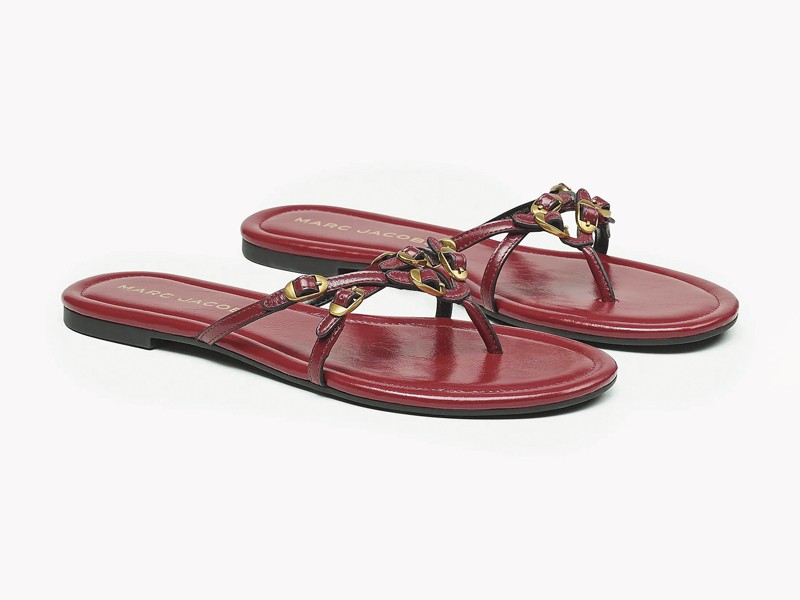
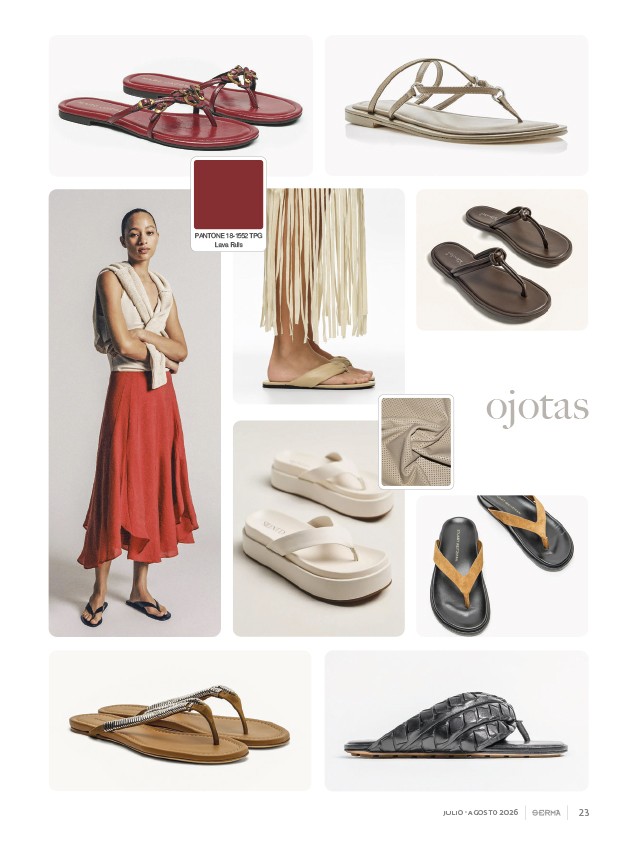
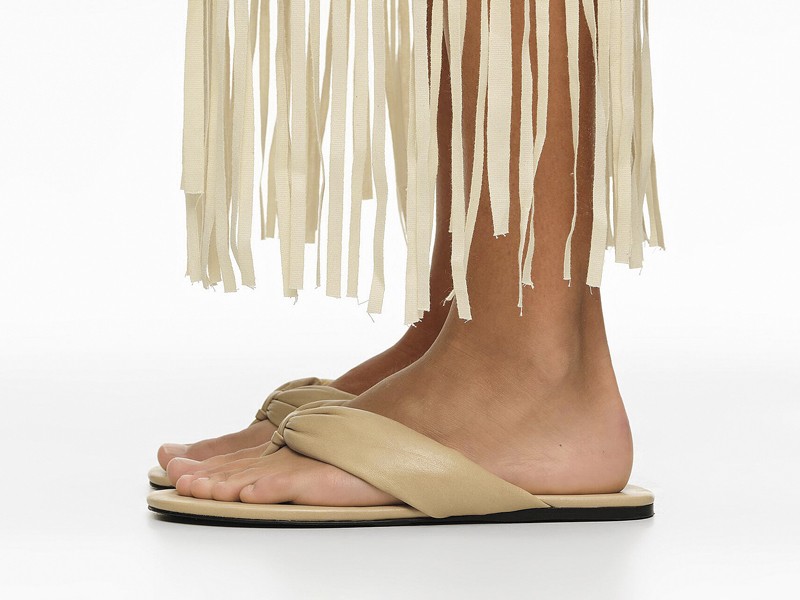
The selection shares an immediate morphological cue: a visible junction between the toes that leads the straps toward the sides or into broader areas of the forefoot. This foundation keeps the typology recognizable even when the proportion of the sole unit, the apparent thickness of the bands or the number of upper elements changes. The open structure leaves much of the foot exposed and concentrates product identity into a limited number of lines.
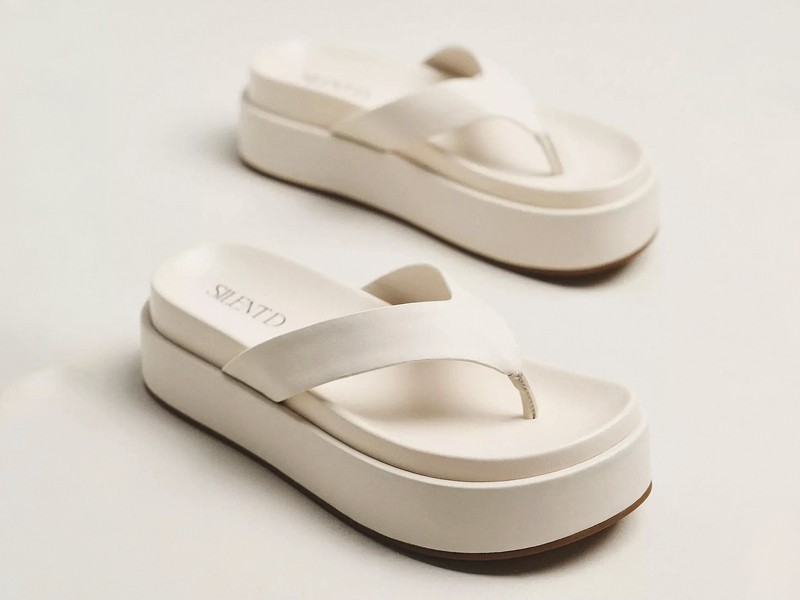
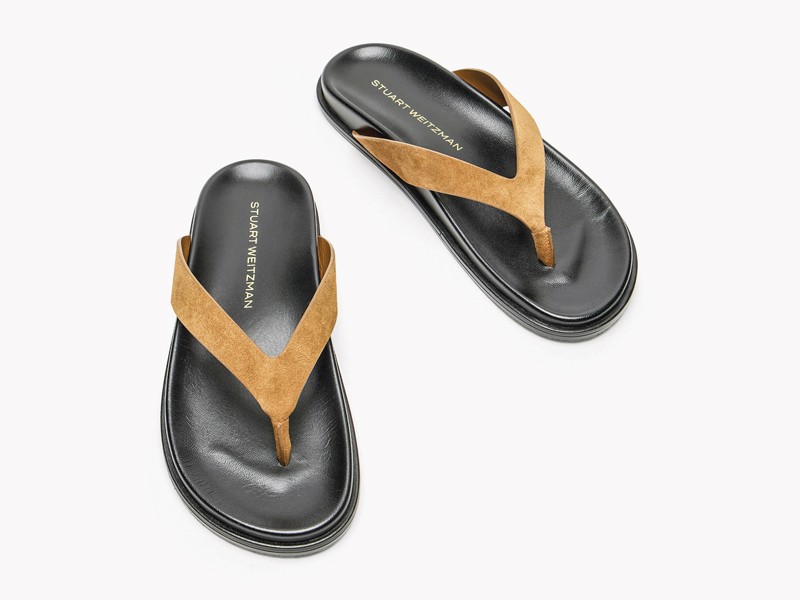
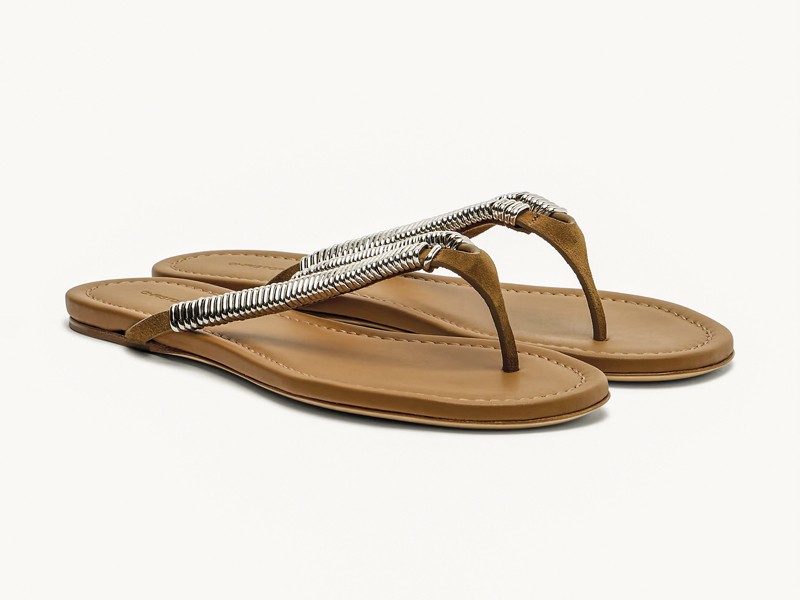
Within this scheme, visually thin sole units, thicker profiles and a light-colored version with more pronounced side volume can be observed. The image does not establish how they were manufactured or which materials they contain. What can be compared is scale: a slim strap over a low sole unit creates a more linear reading, while a more visible base or a broader upper distributes visual weight between the upper and lower profile.
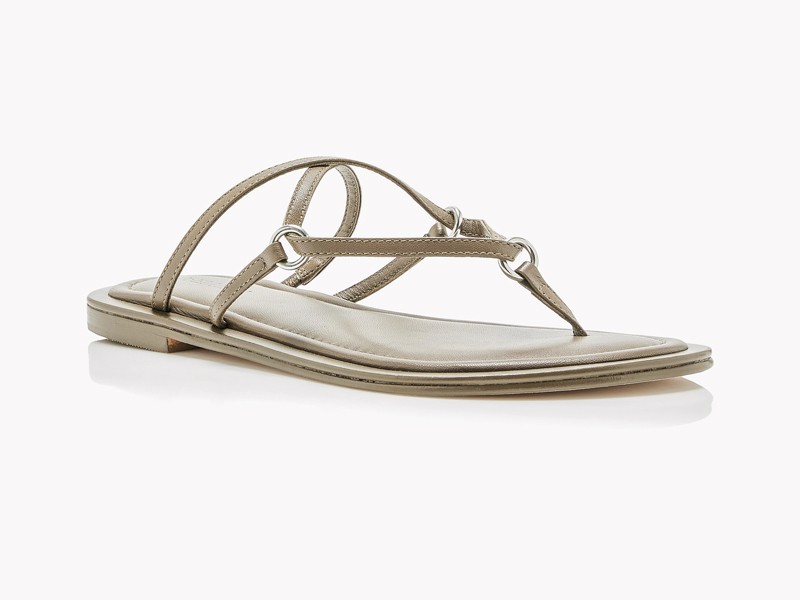
A first group preserves the V-shaped route, with two branches moving from the toe post toward the sides. Within this family, variation comes from very slim bands, doubled lines, small crossings and bright-looking applications. The design can keep the instep exposed or add a central detail without changing the essential flip-flop reading. Differentiation depends on the direction and visual density of each section.
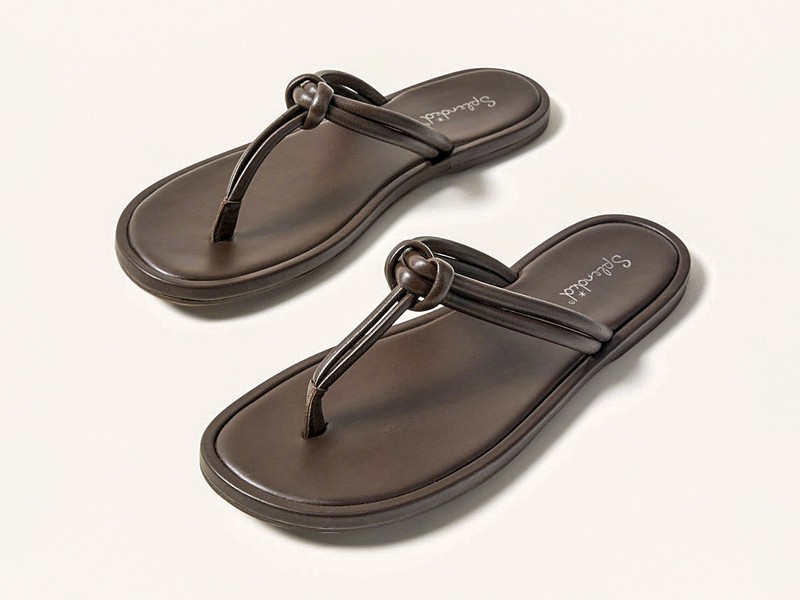
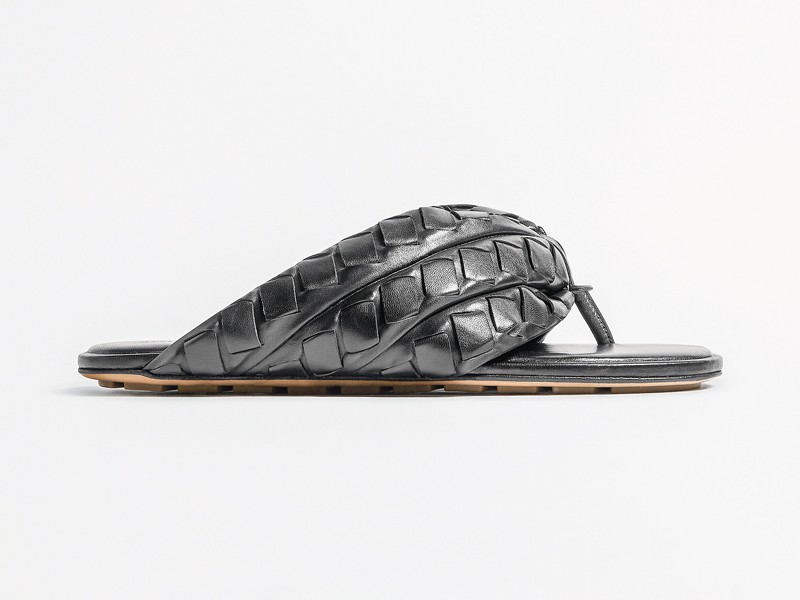
A second group expands coverage. A wider transverse band, routes that create loops or curves, and a dark woven-looking upper occupying a larger area of the forefoot can be seen. Circular ornaments and two-color combinations over contrasting sole units also appear. These solutions do not confirm composition, weaving techniques or internal attachment systems; they describe visible resources that can be transferred into a brief through width, number, placement, color and relationship with the base.
For manufacturers and brands, a simple matrix can separate three variables: toe post, side route and upper coverage. The visible profile of the sole unit, the presence of ornaments and the color strategy can then be added. Pantone 18-1652 TPG Lava Falls supplies one specific red reference on the page, accompanied by cream, browns, black, warm tones and metallic-looking details. Color acts as a secondary variable here, either emphasizing the strap route or visually connecting strap and base.
The opportunity for suppliers lies in presenting straps, toe posts, ornaments and open uppers through applied samples and comparable specifications. Each sheet can state composition, dimensions, available colors, a supplier-confirmed process and documented compatibility with the proposed construction. For finished product, top and side views can show coverage, proportion and component combinations. This order supports communication among design, sourcing and production without assigning comfort, durability, fit or other performance claims that would require testing or technical documentation.

Suppliers of straps, toe posts, ornaments, open uppers and sole units, together with manufacturers of women’s flip-flops, can present component systems and verified applications through SERMA.NET and SERMA’s digital catalog. Comparing minimal routes, intermediate coverage and broad fronts also provides a visual resource for Instagram @serma_net and Facebook SERMA, including collaborative posts with companies from the sector.
Contact: marketing@serma.net | WhatsApp: +54 9 351 394 8656