Ski Footwear Combines Volume with Visible Warmth Details

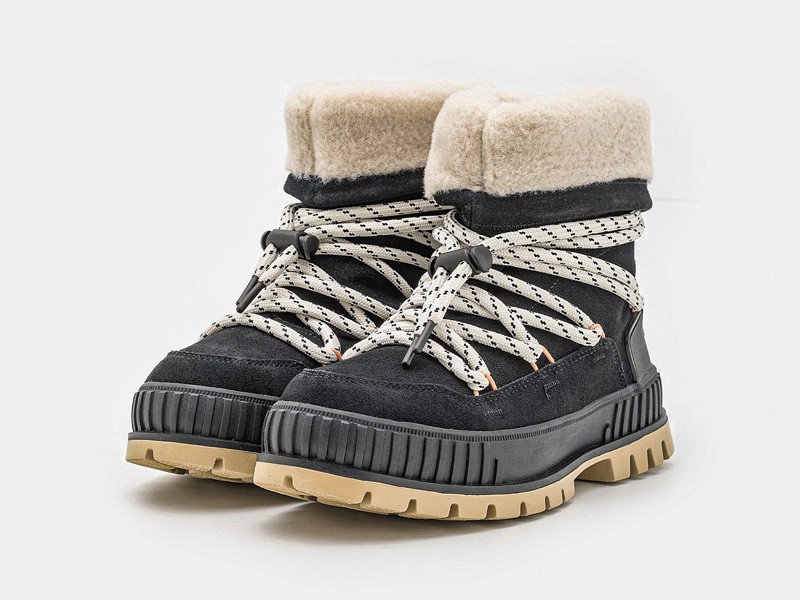
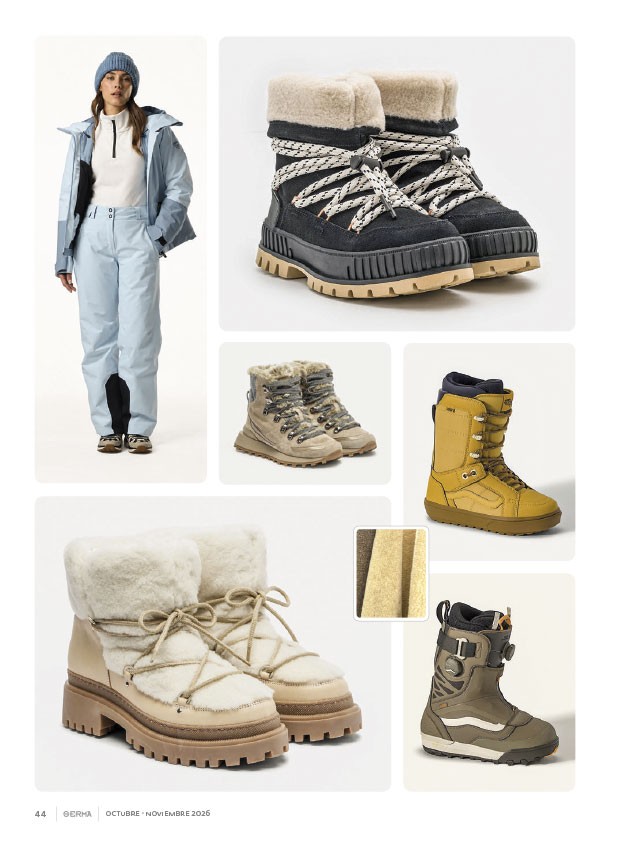
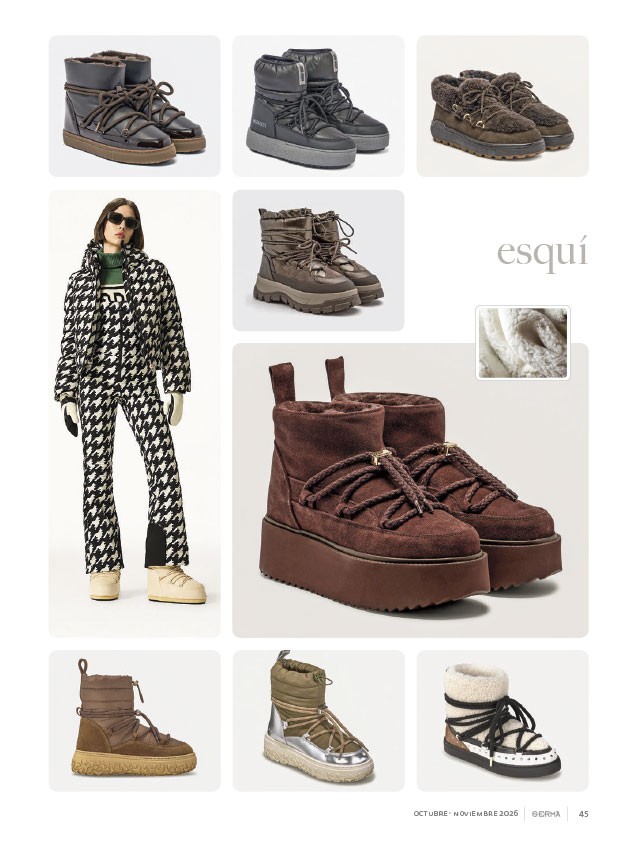
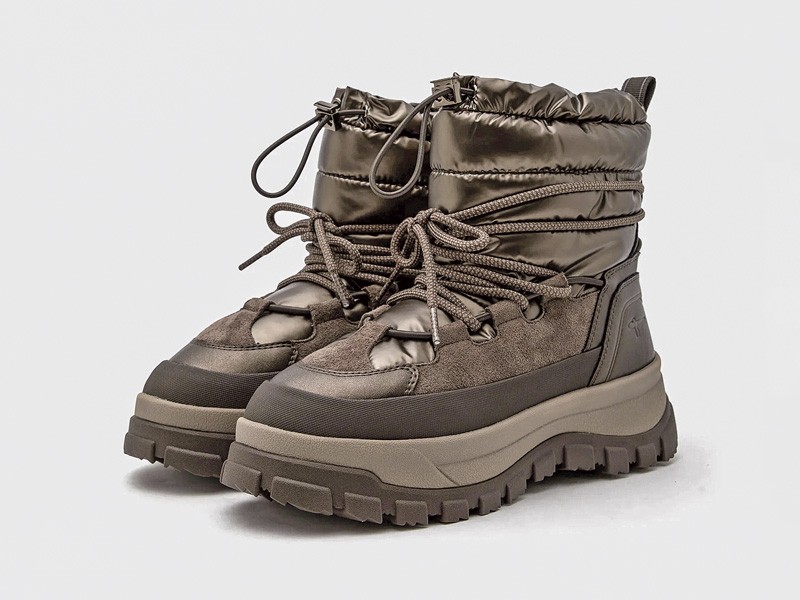
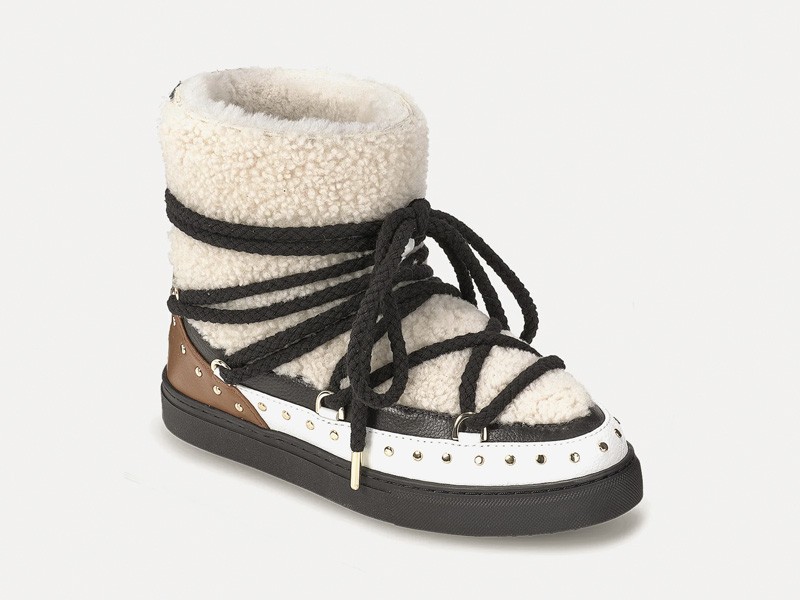
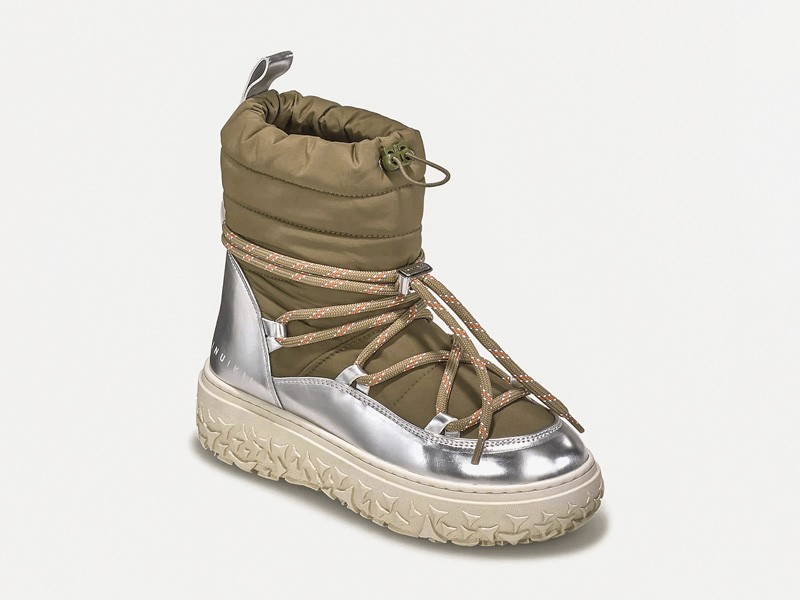
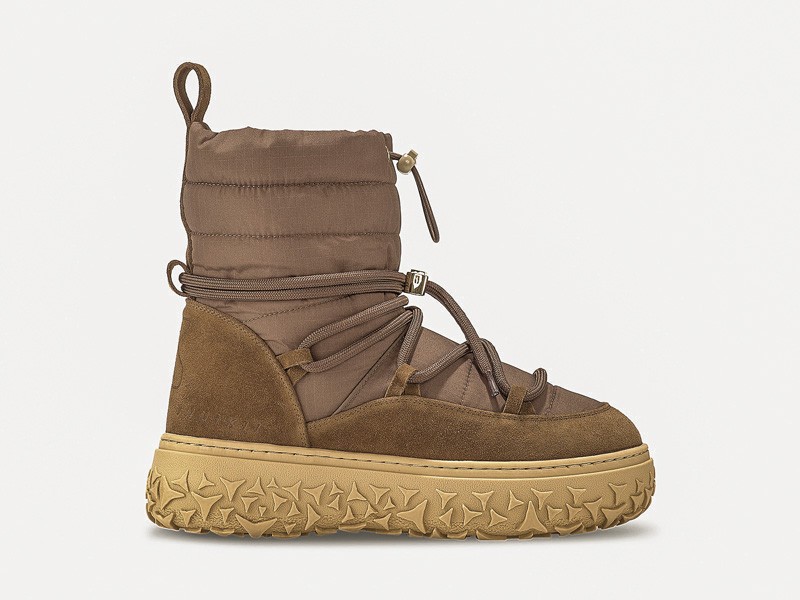
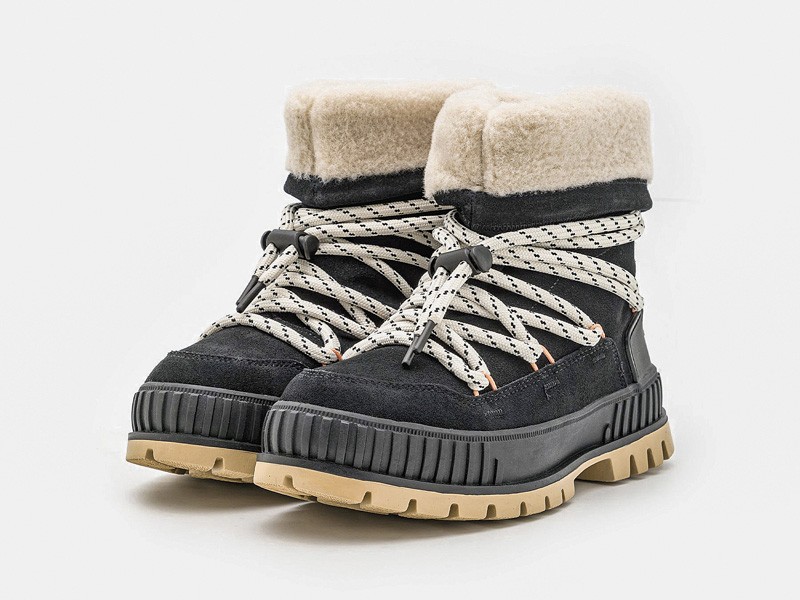
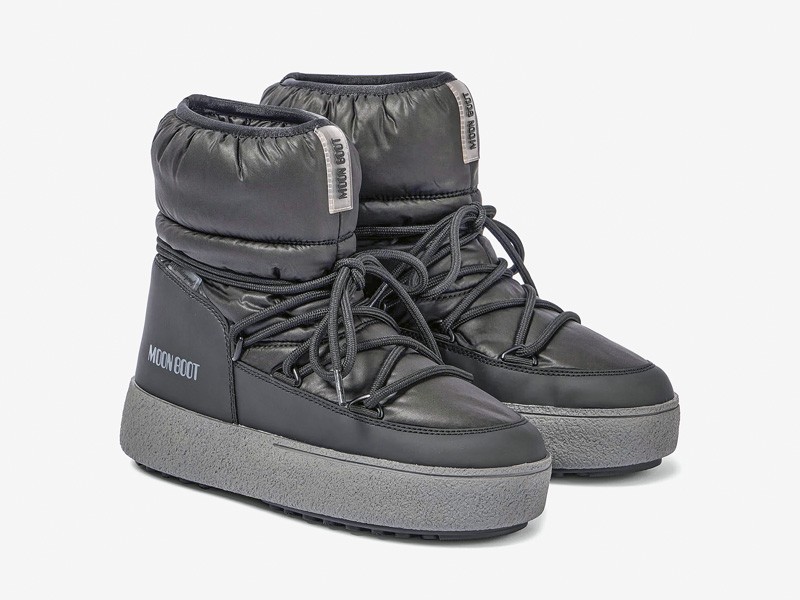
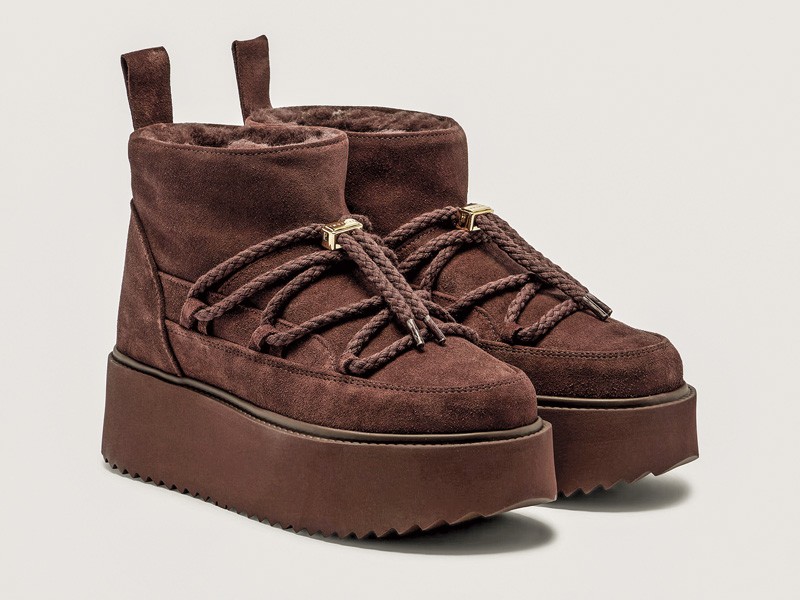
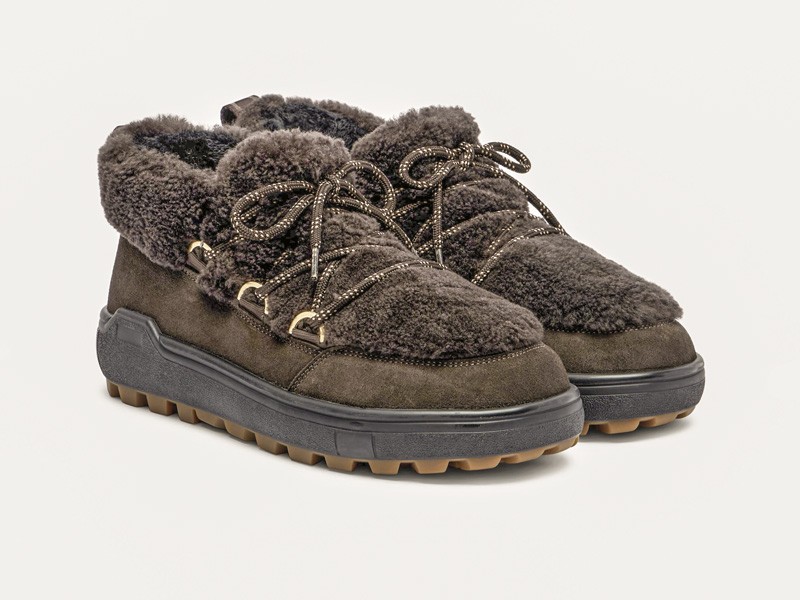
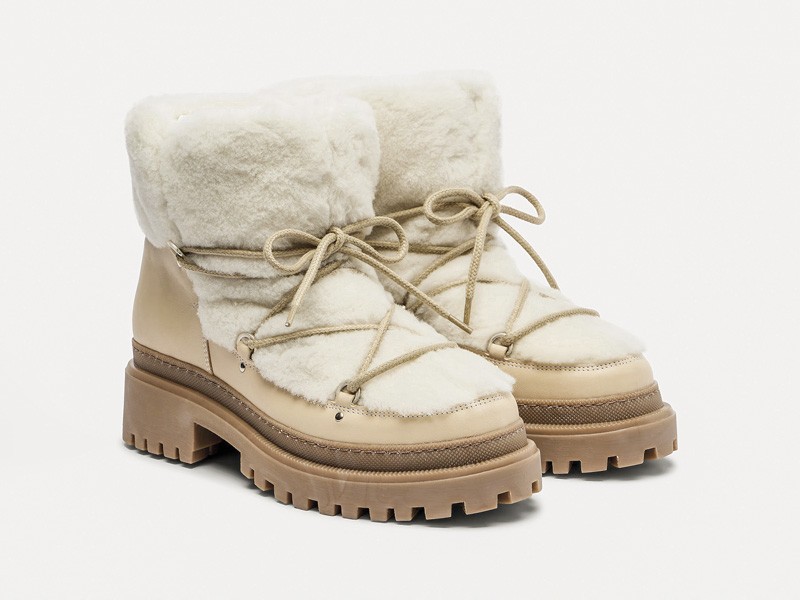
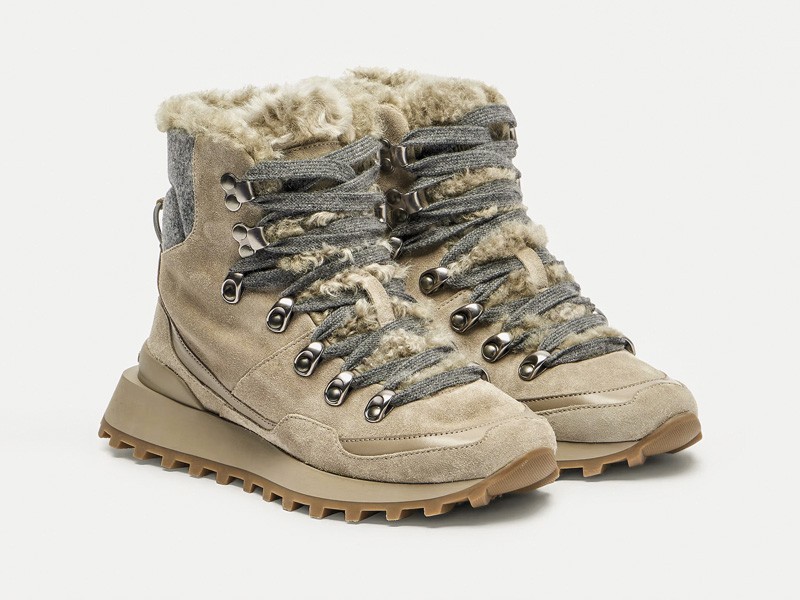
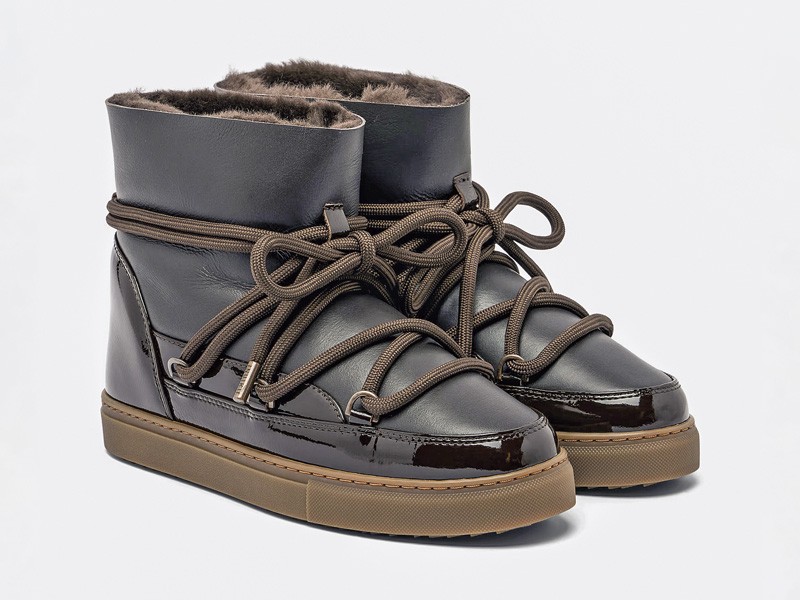
The selection brings together mid- and high-shaft boots whose visual presence is shaped by volume. Some have pale, fluffy-looking cuffs set against dark or beige shafts; others follow a more uniform silhouette, with closed lines and lacing. Shorter, broader profiles sit beside taller boots that extend up the leg. The printed word “esquí” groups these winter footwear styles under a shared heading while the designs take visibly different directions.
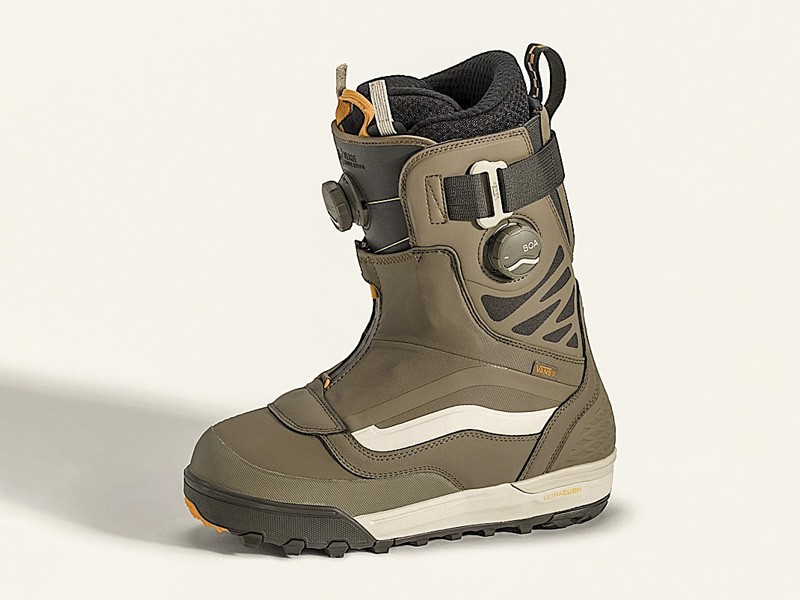
Proportions emerge from the relationship between shaft, vamp and sole. On some pairs, thick soles and ribbed-looking sidewalls broaden the profile; others have flatter bases beneath a taller upper. Folded or exposed cuffs create a contrasting edge, while smooth-looking, padded or paneled shafts change the appearance of each model. These are visible design differences and do not establish a specific use or level of protection.
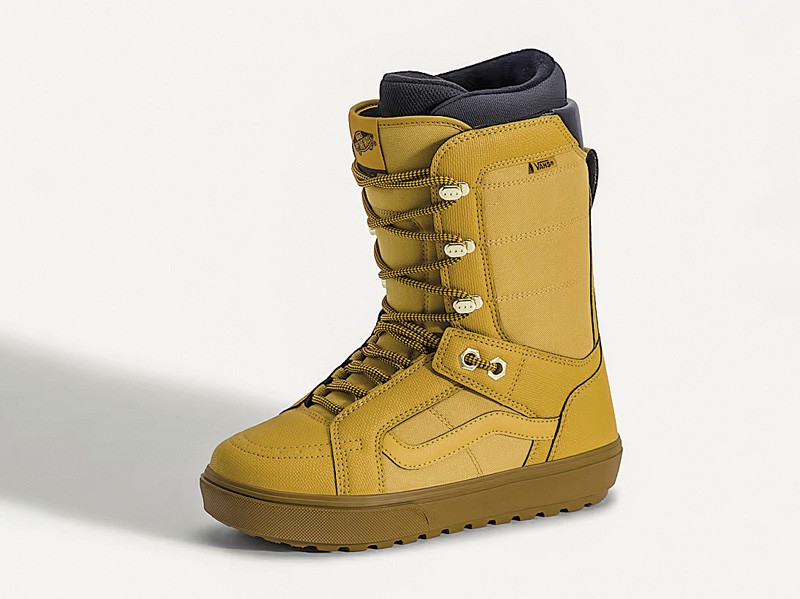
Visible fastening details range from standard laces and technical-looking cords to hooks and metal pieces. On some models, laces run higher up the shaft; on others, they are concentrated across the vamp. Lace-and-hook combinations add rhythm to the surface and make the fastening route more prominent. Pull tabs and overlapping panels also help organize the visible construction.
The palette includes black, gray, beige, brown, olive and yellow, with contrasts among shafts, laces, cuffs and soles. White or cream textile-looking edges stand out against dark uppers, while earth tones create a more continuous appearance. A yellow boot and a silver-accented model extend the range toward stronger statements. The images show fur-like, textile-looking, smooth and padded-looking surfaces, but they do not confirm composition, waterproofing, insulation, resistance or manufacturing processes. Those attributes require technical specifications and appropriate testing.
For brands and manufacturers, the range of profiles supports winter assortments with different levels of volume, height and contrast. It includes compact styles with visible cuffs as well as high-shaft boots with lacing across the front. Neutral shades can anchor the range, while yellow or metallic accents create focused points of difference. These features offer a concrete basis for presenting alternatives within one commercial family without assigning every style the same intended use.
The opportunity for suppliers is to offer coordinated choices of surfaces, visible linings, laces, hooks, pull tabs and soles, each accompanied by verifiable information about its application and characteristics. Design, modeling and purchasing teams can compare samples by apparent texture, color, component placement and sole proportion. A product sheet can keep visual features distinct from performance data, allowing each specification to be assessed against its supporting documentation. This gives supplier and manufacturer discussions a clear starting point in visible product details, followed by a technical review before the product is specified. The same approach can be used to compare colors and placements across a coordinated group of styles, while preserving each model’s distinct proportions. For suppliers, clear sample labels and application notes make it easier to explain where a component appears and which details still need technical review. This keeps visual presentation useful for assortment planning without turning appearance into an unsupported performance claim. It supports clearer development discussions.
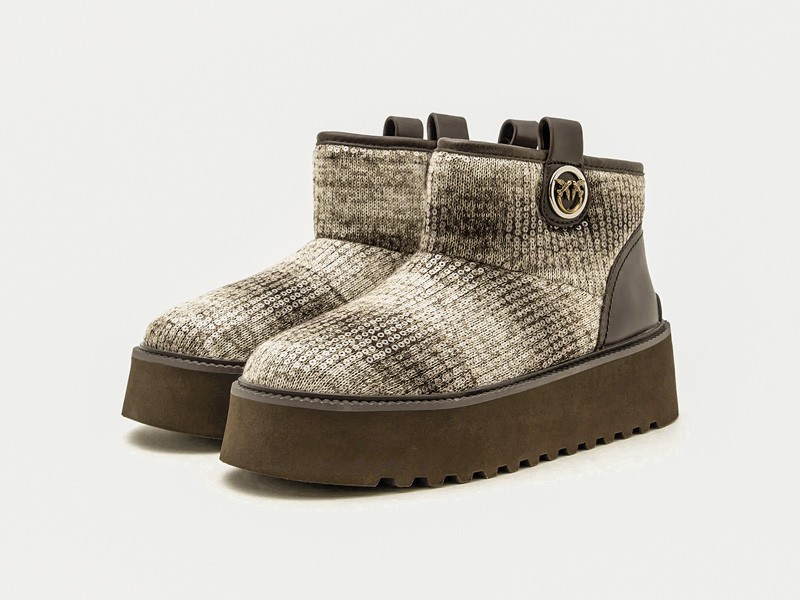
SERMA.NET offers editorial and commercial spaces for winter footwear manufacturers, brands and suppliers. Companies offering surfaces, linings, laces, hardware or soles for boots can present their work to a professional audience through SERMA’s digital catalog and collaborative posts supported by images and verifiable technical information. Learn more on Instagram @serma_net and Facebook SERMA.
Contact: marketing@serma.net | WhatsApp: +54 9 351 394 8656